Showing posts with label priorities. Show all posts

Tuesday, September 30

the good fight

what does an average middleclass person in the developed world have to really fight for? stand up for? do capital-S Something about?

plenty of stuff, surely. but then again... fighting seems dangerous. difficult. as long as we have access to some safe-enough shelter, plentiful-enough groceries, functional-enough plumbing, a little companionship, what else could we need to really worry about? with those basic necessities secured, most of us will be content with the state of things, whatever mild to moderate chaos or metaphorical storm clouds may swirl around on the outskirts of our little routines. 

do I mean "be content with," or "get complacent about"?

photo of an art piece in downtown Indianapolis, with a neon crosswalk sign flashing "DON'T CARE" in blue all caps

both, I guess. the main difference between the terms is in the level of awareness each implies. complacency means ignorance. we can frame our implacable cockroach-like ignorance as blissful and cozy, or as a challenging opportunity to learn more stuff. or maybe as protective wall, willful and resolute. which way we see it (or if we see it at all, I suppose) is a decision to make. a mindset we get to set. more likely, multiple shifting mindsets that we trade in and out as days come and go. 

my list above of all the basics that would be worth fighting for if we had to didn't include any education, but really it should. what kind of teacher would I be if I couldn't say learning and knowledge are worth fighting for, standing up to demand, or working as hard as possible for, after all? we need good food and good information to really survive on this planet. we can't leave our brains out of the game. useful stories are what civilization is made of.

we've watched the newest Superman movie more than a few times this summer. is it a useful story? (perhaps I should ask "useful for what?" or "useful to whom?" here. stories can be made to do many kinds of work in the world. not every storyteller has the same kind of use in mind. not everyone understands their needs for safety, shelter, food, and information in the same terms as other people's.)

despite the comicbook/superhero genre not being my usual cup of tea, I did like the messages this one braided together for us. 

  • your biological family and their cultural values aren't the be-all-end-all of who you are or can be. 
  • seeking peace and justice is not easy; people will probably complain no matter what you try. 
  • success of any kind at almost any level takes a ton of collaboration: there's work for the superheros, for journalists, and maybe for the unruly canines too. 

not all fighting is physical or violent (thank goodness). inasmuch as my daily work might be considered a figurative battle-- to wrangle my modest expertise in technical writing into a series of effective lessons for a bunch of college students every semester-- to apply decently rigorous empirical methods to relevantly articulated research questions in the field of media studies-- and all the other paperwork and collaboration and sitting through meetings that attend my little academic career-- then we can say I've fought to defend my few square feet of shelter and my $600/month grocery budget. perhaps I also fight here and there for recognition, for friendships, for leisure time, for a little peace and quiet. what advocacy my life entails beyond these selfish pursuits is very small. smaller than a pebble thrown into a puddle, it seems.

professionally, I advocate for all the podcasts to have transcripts. for inclusive and non-punitive learning-centered pedagogy where students get to make a lot of decisions for themselves instead of merely following arbitrary instructions. for a rejection of the workaholic mindset that still pervades academic culture. for everyone to do their best to read more and communicate clearly and vote in all the elections.

does all of that make a difference? I'll at least say that it doesn't not make a difference, so that's something. I won't always be able to measure the difference it might be making. there is plenty of hope involved.

could I make more of a difference if I were a scrappy investigative journalist? 

more or less is not the right question here though. it'd be a different kind of difference, on a different stage, but another form of education in any case. keeping people empowered with accurate and relevant information about the present universe. meaningful work, indeed. 

but also... maybe scathing exposés about the far-reaching misdeeds of tech billionaires only bring about lasting consequences in comicbook movies with happy endings. 

what does an average middleclass person in the developed world know, really, about all the bigger things out there to fight for? all the things we could/should/might/ought to/would do capital-S Something about before it's too late? nobody can be rationally informed about everything everywhere all at once. it's too much. even if we are informed enough about reality, learning/knowing/deciding what to do about it is another set of mental battles in itself.

my currently second-most-favorite podcast Never Post published a roundtable episode on this idea, back in May. the host (Mike Rugnetta--the one and only. I know, I know, will I ever shut up about Mike Rugnetta?) notes the tension between how we use the internet and how we might wish we could use the internet. it is a global medium--that's why it was made. one of the coolest things we do with the internet is "to socialize and connect globally, which, you know, that's powerful and that's important," Rugnetta says, "but we can't act globally. [...] it's even hard to act locally given the state of especially American politics.
"And, you know, I feel like even my ability to even know how to act locally has perhaps atrophied a bit because of my focus on the importance of familiarizing myself with national and global events."

are there information diet plans out there, something akin to the handy food pyramid, but for sources of news instead of calories? probably. 

do they teach such things in grade school so everyone grows up knowing that your brain will not thrive on a diet of nonsense and trash? maybe somewhere somehow. bless everyone who dares teach grade school.

there is so much information in the world to be had. maybe I shouldn't say "too much," because that depends. too much for what? for whom? 

sometimes it does seem necessary to just stop for a little while though. to push back on all the information (the firehose, the overload, the deluge, the six-lane highway traffic jam) with a little carefully cultivated ignorance: "I haven't looked into that myself," "that's not my lane," "I trust someone else to be smart about and work on that particular problem" and so on. (this brings to mind some of Hank Green's recent vlogbrothers video in which he touches on the difficult value of trusting our fellow humans.) we can all find our own good fight to fight-- there isn't just one. 

hopefully we aren't all fighting alone and/or at cross purposes though. hopefully we have some kind of justice gang/league/squad to back us up at least some of the time. smart and good people don't only exist in the comicbooks and movies. the Green brothers are on my list of people I admire for trying to make the world better. academic acquaintances are on the list. non-profit organizations managed by people whose names I may never know are on the list. 

its been a week or so since I read this detailed breakdown of "The Dark Internet Forest" as a concept for understanding the possibilities and risks of all our globally mediated connectedness and was thus suddenly enchanted with its author, Erin Kissane. she comes back to the centrality of place-- real or physical or digital or conceptual, place is important to remember. positionality. relationality. places matter. where are you? what other places are within reach right now? who else is there? how can you join forces and do Something?

I especially loved that Kissane cites this beautiful pushback against the classic "tragedy of the commons" idea. Elinor Ostrom's book helped me write my dissertation. I should read it again sometime. 

doing capital-S something is not always (probably not often) gonna be easy even when you have a team of active, collaborative superheros to work with. it's still messy. pebbles in ponds sometimes and big splashing ordeals other times. 

flip a switch somewhere and set your mind to care at least a little. doesn't have to be about everything. just don't get totally complacent.

photo of an art piece in downtown Indianapolis, with a neon crosswalk sign flashing "DON'T CARE" in blue all caps and "CARE" beneath it in white

Sunday, January 19

moments and years

I missed the chance to commemorate the true birthday of this little blog, last Monday. but today, January 19, 2025, marks exactly 20 years since the first actual, fully-fledged post: a response to our first key reading assignment about webdesign and such.

what a different world. such a different place it was. or maybe twenty years ago wasn't so very different, and it only seems so because I and my perspective have changed so much since then. 

what happens if I stitch together a few snippets from all the blogged Januaries of each year since 2005? what new montage will spill into this digital page in between them all?

I tried my best to pull from sections nearest to the 13th and 19th of the month (a thing much easier to do from the posts before 2014ish, when the apex of graduate school + its aftermath slowed down my writing here so much).

what I notice amongst these snippets and what you notice will be different, I imagine. I notice the unending pulse of learning and academia. books and thoughts chasing each other in circles. comments about the weather seem to sit neatly in the background with questions of identity and all its tangly unspooling. these words always have been for me more than anything. does all this pontificating from past amelia still sound like useful advice? mostly yes, I think. but I would say that, wouldn't I?

2006

the fact that energy is behind it all is somehow unifying. simple

...

linguistic structures will be a low-key class. it is full of people i don't see in my other classes. the other english majors. non tech writing people: the lit majors, the teaching majors. it's weird.

2007

get used to the fear and the doubt. get used to being faced with new facets of your own ignorance. get used to the pain. embrace humility. you can't always feel in control.

but really, how comforting is that?

I don't know. I'd take humility over false confidence anyday. but then the humble rarely get much respect.

2008-2009 (a pause.)

2010

the world is big.

there's a lot going on in it. even in this mostly empty house, there's me sitting at the table, typing, stretching a bit of CSS out over a half-built website skeleton, scribbling a few what-ifs, listening to Radiohead. and I made banana nut muffins this morning.

2011

in the beginning, this blog was just a place for all my first impressions--all my doubts and worries about the usefulness or meaningfulness of all the stuff I was learning. after that semester, I decided to keep blogging--mainly about writing (Starcustard and random short stories), school (rhetoric, more webdesign, and Isotope), and life (philosophical thoughts about my job, vague complaints about boys, and so forth). and so it continued. I'm still here. I still blog.

...

what do those stories say about me?

I'm thinking about all the texture of my life. all the patterned and patternless history I've collected so far. telling stories is one way to remember it. and on the other hand... telling and retelling and re-remembering these stories is one way to completely revise the past. after a few months or years, it becomes easy to bend the details. to emphasize the funny parts. to leave out the things that make you look like a bit of an idiot.

how I envision myself is pretty complicated, I guess. perspective is weirdly limited like that.

2012


which we am I talking about, anyway? and when? and where? 

2013

it may not make any huge difference in the long run, but even so, the ultimate pointlessness of things should not be dragged up as an excuse for us to stay in bed all day. at least not more than once or twice a year, anyway, right?

2014

this seemingly misnamed semester will inch along to spring in due course. and when that happens, finals and stress will no doubt prevent me from enjoying it as thoroughly as I could, but for now... well for now, the semester is glowing with warm, cozy pillows full of insight and excitement. this might be the best January ever.

2015

I have spent much (but not enough) of this long, mostly-pleasant weekend sitting by the window, trying to focus on readings for classes. 

.... 2015 is here, still all new-feeling. gradually we'll get to see both how it changes my life and how it doesn't.

2016

today it is raining in spurts, like a chilly and unkempt spring. Tuesday's snow is long since melted. it'll be back this weekend. the universe is giving us yo-yo-ing seasons, somewhat drab all the way through, with occasional bright sunset smudges.

the trees are bare. my apartment windows open onto more distant views than they did in summer and fall. at night, more and more streetlights perpetually leak into my bedroom under the edges of the blinds. I notice the faces of buildings I have never seen from such an angle before.

2017

it's empowering to reflect on the background structure of your whole life. to actively participate and acknowledge your role in either accepting/reinforcing or resisting/revising the culture you swim in. and that seems important. that's what it takes to make all of that power and structure more open-book, more readable, more transparent and less like a vice.

2018

if I had the brainpower on this Friday evening to make some additional academicalish comments on how these beautifully-commentated marble races and our fascination with them could link up interestingly with some of the tenets of object-oriented ontology, I would. but I don't know all that much about object-oriented ontology myself, and should probably not let it distract me much more than the Marblelympics already have from writing up nicely finished dissertation chapters about digital ethnography and distributed commons-based peer-production and what that all may mean for technical communication and human culture and such.

2019

and then the speaker said something about facebook hopefully having a major role in someday establishing some kind of global online government. after that, according to my notes, I typed out this:

"eeeeek."

does the world want and need to be connected by a central online platform, really? is the capitalist interest that facebook has in being the medium by which everyone is connected anything we can trust?

2020

all this potent potential meaning curled up in to hold. and then there are all these phrasal verbs, too: hold back, hold up, hold out, hold off, hold against, beholden to...

to be held as a parent holds a young baby is to be safe. comfortable. cared for. right?

to be held is also to be restrained. controlled. and to be restrained isn't usually considered comfortable, though... right?

or is it?

2021

and when I listened to this recent episode of So Many Damn Books with George Saunders I felt more affinity for Saunders's love of teaching writing than perhaps I might once have felt. his advice is to remember that you're never just teaching 20-somethings who barely know what to do with their adulthood when you meet them-- you're also teaching the 40-something-year-olds that they'll become. I like that. (not all college students are 20-somethings, but the concept holds. we are all humans-in-progress.)

2022

why does this small saga of knitting woe and triumph deserve documentation in this little blog of mine? I don't know if there's an answer, other than my typical interest in capturing bits of experience and emotion in as vivid and accurate description as I can. I like to write these vignettes of where and when and how, with all the metaphor and adjectives they need to vibrate satisfyingly from my imagination to yours.

2023

I trust that learning is happening, little by little, in all of our spongey-curious brains.

2024

January, perhaps fittingly, seems so very long. all the transitions it spans-- all the shifting, deepening of the dark season, the post-holiday recoveries, the shiny new beginnings of a calendar year and of an academic semester-- all of that is a lot for 31 average winter days.

I don't know if it really did feel longer for me this year, or if I'm only saying that because it seems like an appropriate thing to sigh into this semi-bleak and impermanent world.

- - -

and now what? do I still blog? 

time will tell. if you'll indulge me, I have one more excerpt, this time from May of 2014, when so much of me was so unsettled and rearranging itself and I clung to my love of writing as if nothing else mattered:

from time to time I wonder what it is I'm trying to do here. does it matter what I'm trying to do here? I write. our reasons for enjoying things are seemingly inarticulable. is there irony in that? I claim that words can make everything better. is that true even when the words crumble into meaninglessness as they fail at encompassing feelings? do I mean that even crumbled words are worth something?

yes. crumbled and halfhearted attempts at capturing it all still beats blank silence. I know only so much stuff fits into one life. there are only so many live possibilities. this is the way it needs to be, I guess. but the way everything is carved up now isn't how it'll always need to be carved. our crumbled communications don't stand still; they change.

.... and even if I can't really say I know exactly what writing means, I can try to explain what I like about my practice of it.

I like the pausing and sifting through potential descriptions and the shuffling of parts of speech. I like the dancing of clauses and punctuation and space. I like the starts and stops and backtracking, the meandering fragments that stretch so subtly for their finish. I like the way these little symbols can twist and mold intangible thoughts into a dozen differently shaded shapes. I like unknotting a tangly draft, picking out the pieces that don't belong and pulling away each piece that does, tidying it all into a hopefully-clean curl of interesting prose. sometimes I save the scraps for later. sometimes I can't. .... I write for the writing's sake. I sketch and wonder and experience plenty of other things for the same reason. they don't have to be means to some other end, these creative processes. maybe all the best things are their own ends, or at least neatly wrapped around something like one.

after twenty years, does this blog count as art? as an end in itself?

doesn't matter. it's here. I'm here. for now.

Monday, November 25

miscellaneous tapestry

the many instantiations of various spinning and weaving arts and crafts consume me. there remains no time for blogging.


these are little tapestry weavings in various sizes. 
and I have a scarf-in-progress too:


so much in the middle of unfinished. which is as it should be I suppose. a merry-go-round of works in progress. 

Friday, October 18

bunny vs. fence

the other day, this lengthy stretch of fencing (branded nicely enough with so much black, white, and red to represent the construction company Sundt, whose slogan seems to be three standalone words, "Skill. Grit. Purpose.") went up all along the drive that goes between my academic office building and various parking lots between here and places off-campus.

I'm told that they'll be building a new dormitory somewhere on top of the rocky, scrub-filled gully on the other side. it'll have more student housing and more classroom space. so cool. so necessary. 

some of us in my academic office building are mildly worried that this new construction will block our most excellent west-facing views of Granite Mountain. we shall see, I guess. I remain hopeful that the slope of this gully will mean the top of the new dorm will be low enough for us to look over from our third floor offices.

as I walked back out from my office to my car last Tuesday, I noticed a little grey-brown bunny frantically searching for a way through the fence, up and down the hill in short bursts, back and forth over the blaring red curb, every so often sprinting for its life all the way across the road back to the unfenced rocks and bushes to the east.

I watched it for a solid few minutes. it hopped away in panic from my slowed footsteps, then dashed in further panic across the path of someone's big white SUV driving up past us both. 

I didn't see the bunny come back that evening. so I studied the fencing as I walked. surely one little bunny would eventually find a gap to squeeze under, I thought. (the creatures seem to squeeze through pretty tiny gaps in our back garden gate, after all.)

if the chainlink were bare of this black branded tarp, then could a little bunny more easily get through? or if the corners of each fence panel were less square and more rounded, that would surely help.

I wonder if any of the planners and facilities and maintenance people worried about the impact of this construction project would have on the non-human critters in the area. hopefully at least a little bit. probably not as much as they worried about other aspects though-- the costs of labor and fencing and other materials; the design and the blueprints and the building's whole physical footprint; and the timing and logistics and how soon they can start selling spots in the new dorm.

at the bottom of the hill, the fence merely ends,. for now. the sidewalks remain open and the parking lots in regular use. for now. if the bunnies are persistent enough, they will find their way back into their hideaways in the scrub-filled gully. 

and hopefully they will all find new hideaways once the gully is dug out and filled with a bunch of concrete and whatever else dormitories are made of.

and if not?

they're just bunnies. some of their cousins, whichever side of whichever fence they've ended up on, will replace them soon enough.

Wednesday, June 1

lines from history (or, happy pride month)

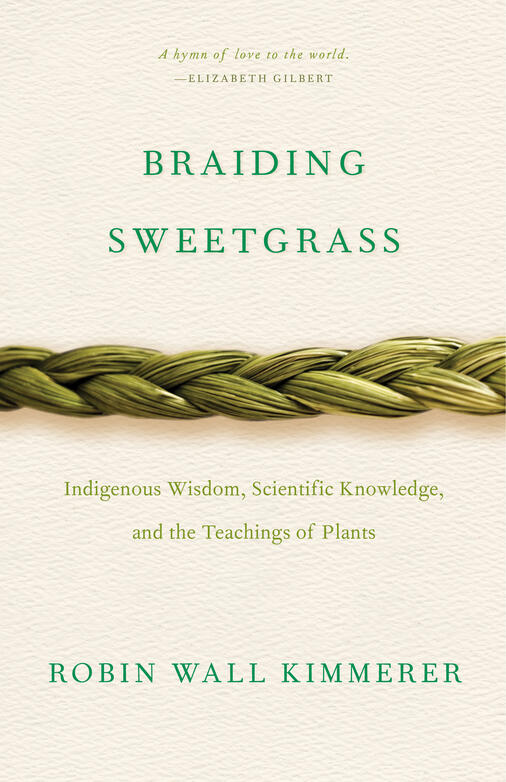
last summer I was quite enamored of Robin Wall Kimmerer's Braiding Sweetgrass. so much of it resonated with elements I hope are part of who I am and plenty that I hope will eventually be part of who I am.book cover-- Braiding Sweetgrass

this is one of the former bits-- "My natural inclination was to see relationships, to seek the threads that connect the world, to join instead of divide." (Kimmerer, p. 42)

how are people, places, things, and ideas like other people, places, things, and ideas? how much can we commune, however briefly, with even the furthest-flung perspective?

I find it fun to connect things that don't seem (to most people) like they go together, just as much as to notice connections among things that do. juxtaposition is a useful direction for thinking. mash this with that, just to see what might happen. some of the weird combinations might not work for everyone. or some of them could be like tuna fish with pears. 

today, I finally finished up the audio edits for the last section of my Librivox recording of Angelina Grimké's Letters to Catherine E. Beecher, in reply to an essay on slavery and abolitionism. the collection was published in 1838, the same year Grimké got married to someone named Theodore Weld (also an abolitionist and writer-- maybe I'll read a Librivox version of his 1839 collection American Slavery As It Is: Testimony of a Thousand Witnesses sometime?)

so 1838 and 1839 must have been busy years for Grimké. but most of the letters are dated the year before that, 1837. 

that was 185 years before this one. almost five of my lifetimes ago, so far.

the penultimate letter, Letter 12, was one of my favorites of this little audiobook-to-be. it is so timeless. along with her abolitionism, Grimké wrote ardently about feminism, women's suffrage, and equality on all counts. race, gender, whatever-- all human rights should apply to all humans. 

none of her sentences out of context are as powerful as they are stacked together in this letter, but it seems silly to paste the whole thing here when you can more easily go read it yourself via Gutenberg.org (or wait a few days and then listen to it via Librivox.org, either way).

so to compromise, I will abridge the letter as best and as meaningfully as I can, keeping in what has been most impactful and resonant to my 21st-century brain. and then, carrying on in my own 185-years-later mode of asynchronous discourse, I'll add a few comments.

...The investigation of the rights of the slave has led me to a better understanding of my own. I have found the Anti-Slavery cause to be the high school of morals in our land—the school in which human rights are more fully investigated, and better understood and taught, than in any other. Here a great fundamental principle is uplifted and illuminated, and from this central light, rays innumerable stream all around. Human beings have rights, because they are moral beings: the rights of all men grow out of their moral nature; and as all men have the same moral nature, they have essentially the same rights. 

.... When human beings are regarded as moral beings, sex, instead of being enthroned upon the summit, administering upon rights and responsibilities, sinks into insignificance and nothingness. My doctrine then is, that whatever it is morally right for man to do, it is morally right for woman to do. Our duties originate, not from difference of sex, but from the diversity of our relations in life, the various gifts and talents committed to our care, and the different eras in which we live.

This regulation of duty by the mere circumstance of sex, rather than by the fundamental principle of moral being, has led to all that multifarious train of evils flowing out of the anti-christian doctrine of masculine and feminine virtues. .... Hitherto, instead of being a help meet to man, in the highest, noblest sense of the term, as a companion, a co-worker, an equal; she has been a mere appendage of his being, an instrument of his convenience and pleasure, the pretty toy with which he wiled away his leisure moments, or the pet animal whom he humored into playfulness and submission. Woman, instead of being regarded as the equal of man, has uniformly been looked down upon as his inferior, a mere gift to fill up the measure of his happiness. .... 

Measure her rights and duties by the unerring standard of moral being, not by the false weights and measures of a mere circumstance of her human existence, and then the truth will be self-evident, that whatever it is morally right for a man to do, it is morally right for a woman to do. I recognize no rights but human rights—I know nothing of men’s rights and women’s rights.... 

If Ecclesiastical and Civil governments are ordained of God, then I contend that woman has just as much right to sit in solemn counsel in Conventions, Conferences, Associations and General Assemblies, as man—just as much right to sit upon the throne of England, or in the Presidential chair of the United States.

Dost thou ask me, if I would wish to see woman engaged in the contention and strife of sectarian controversy, or in the intrigues of political partizans? I say no! never—never. I rejoice that she does not stand on the same platform which man now occupies in these respects; but I mourn, also, that he should thus prostitute his higher nature, and vilely cast away his birthright. I prize the purity of his character as highly as I do that of hers. As a moral being, whatever it is morally wrong for her to do, it is morally wrong for him to do. ....

Thou sayest, ‘an ignorant, a narrow-minded, or a stupid woman, cannot feel nor understand the rationality, the propriety, or the beauty of this relation’—i.e. subordination to man. Now, verily, it does appear to me, that nothing but a narrow-minded view of the subject of human rights and responsibilities can induce any one to believe in this subordination to a fallible being. Sure I am, that the signs of the times clearly indicate a vast and rapid change in public sentiment, on this subject. Sure I am that she is not to be, as she has been, ‘a mere second-hand agent’ in the regeneration of a fallen world, but the acknowledged equal and co-worker with man in this glorious work.... Then will it be seen that nothing which concerns the well-being of mankind is either beyond her sphere, or above her comprehension: Then will it be seen ‘that America will be distinguished above all other nations for well educated women, and for the influence they will exert on the general interests of society.’

I can't know what Angelina Emily Grimké would think about the power and influence of women in American society today. hopefully she'd be a little bit gratified, grateful, impressed by how far we've come.

from reading 13 small letters of hers (and maybe a speech or two in an old rhetoric textbook ten years ago, maybe), I really don't know what Grimké would think about trans and non-binary folks, but from her emphatic defense of human rights not being based on gender, I would like to assume she'd be cool and inclusive. she spent her life advocating for the suffering and marginalized in her world. she'd probably do the same now, in whatever ways she could.

progress pride flag-- white pink blue brown black and rainbow colors

here's to making and seeking relationships, connections, and love-- more and more every single sweet day.

Monday, January 31

accomplishment

today, after having planned to do so for some weeks, I printed out all 24 of my scholarly publications, starting from the oldest book reviews from graduate school (one in this international tech comm journal and one over here), all the way up to my most recent conference proceeding. there are almost ten years spanning all this work. it all fits neatly in a manila folder.

there is more to come. a book chapter on Twitch.tv and user experience research. a short piece on blogging as a ritual of self care. more conference proceedings, possibly.

scholarship is not all I spend time and effort on though. especially lately. speaking of self care... part of my self-improvement journey this past several months has involved finding value in more than mere productivity and work ethic and professional accomplishment. it's difficult to even see how those attitudes have made up (and still make up) so much of how I've been conditioned to see myself. moving beyond that mode is not easy.

but I am trying. not everything needs to be conventionally "useful," after all.

even though I take on the role of a tool within the mechanisms of capitalism in exchange for a paycheck and health insurance and such, I can put that role aside and instead, for a moment, become nothing more than a tool for inhaling and exhaling and pondering the universe.

or I can be a tool for reading and interpreting knitting patterns. or for absorbing and reenacting step-by-step yarn-spinning tutorials. (I'm learning to use a drop spindle, see? it's fabulously difficult and not, all at the same time.)

my ravelry project logs tell me I began this shawl sometime in July of last year. six months later, at the beginning of winter break, I finished it, after restarting the whole thing twice, after ripping back to the stockinette section at least twice, and after doing way too much math to customize the number of lace repeats. 

when I'd finally gotten through the first lace section and moved on to the final border... I noticed a couple of wonky twisted stitches that messed up the pattern pretty obviously. instead of purling the stitch then the yarn-over, I'd done them backwards and mucked up the eyelets. (it was only a million hours later that I figured this out exactly. proofreading lacework is a skill I'm not an expert in).

I had wanted to finish this shawl for October. for Thanksgiving at least. for early winter. but now it was almost Christmas and I had a terrible choice to make. could I live with this mistake? or could I not? would anyone else ever notice these backwards stitches? would I even notice them most of the time, as long as the shawl was keeping my shoulders warm? or would the mangled lace haunt me forever if I didn't fix it now?

I'd already torn out so much work so many times. did I really have to undo more? was there any way to avoid another frustrating round of backwards progress? 

this, by the way, is why you're supposed to check your knitting more thoroughly as you go. you're supposed to catch this kind of thing way before more than a whole new row of stitches separates you from your mistakes, let alone half a dozen.

I decided I couldn't leave it. I wanted the lace to look impeccable. so I experimented on my own, trying to work down to untwist things just in the sections where it needed it-- but this made things irrevocably worse. with no other option but tearing back 8 whole sets of knit-purl lacework, I began a desperate search for any documented knitting wisdom I could possibly trust to guide me out of this disaster. Ravelry comment threads. knitting forums. youtube. I pleaded with them all for an answer.

most of what the internet had to give me were tips on how to knit proper lace in the first place, not anything on fixing lace that you've messed up. but finally... somehow... with mere ounces of hope left that there was any reasonable solution for undoing whatever I had done... I found that Suzanne Bryan had a short video on exactly what I'd been looking for.

this video tutorial was everything. I curled myself around my phone screen almost breathless as I watched it, my mind doing somersaults as I realized this could work. it could work! if I could follow the method just right, and keep track of all the ladder rungs of yarn, and not undo more than just the one section...! this would solve all my lace problems. it was brilliant.

so I scrambled to fetch my spare circular needles and cords, carefully and excitedly knit backwards to the problem section, re-watched the relevant video clips twice more, and then started pulling stitches off.

it was a mess.

it was highly stressful, my fears and hopes in the utmost tension as I worked.

I had to keep going back to the pattern's lace charts (even though I generally stay far far away from the snaking codes of any knitting chart if I can ever help it) to pinpoint exactly which bit of the lace I could leave as it was and which bits needed re-making. I had to count and re-count how far down my mistake was and how far over from which edge of the scallop. 

counting is the hardest part of knitting.

but once I had it figured out, I just had to keep swapping the size 6 needle points from this end of their cord to the other so all the re-stitched stitches would be the right size. and it worked. I reconstituted the two tiny sections into perfect lace, paid very close attention to all the mistakes-waiting-to-happen in the remaining few rows, and finished the shawl the evening.

why was this lace-repair adventure so absolutely thrilling? I'm not sure. there was some risk that I'd again just make the mistakes even worse. there was the novel weirdness of loose yarn-spaghetti draped precariously between everything else.

it wasn't easy, but it was exhilarating. Ms. Suzanne Bryan's claims about her lace-fixing techniques are 100% correct. if you manage to complete a fix like this, you feel utterly bulletproof and infallible for the rest of the day. 

-

why does this small saga of knitting woe and triumph deserve documentation in this little blog of mine? I don't know if there's an answer, other than my typical interest in capturing bits of experience and emotion in as vivid and accurate description as I can. I like to write these vignettes of where and when and how, with all the metaphor and adjectives they need to vibrate satisfyingly from my imagination to yours. 

as for the finished shawl-- it's nice and cozy and blue. I've worn it a few times, even. but for me, the process of knitting is the fun part. the satisfaction of transforming material from one state into another state is undeniable.

thankfully, everything is a process from a certain perspective: crafting, learning, scholarly-research-agenda-ing, fire, and people too.

Friday, July 31

completely, partially

my latest LibriVox contribution-- The City of Din, by Dan McKenzie-- surprisingly made its final journey through the prooflistening stage rather quickly this week, and I am pleased to announce that it's been officially catalogued here for all the world to enjoy if they so desire.

the most unique part of this audiobook is that our pug Wesley has a role in it. in the middle of section 2, Mr. McKenzie is discussing whether to categorize dogs as noisy or not, and he re-enacts the inner monologue of a man trying to sleep while a dog barks somewhere out in the neighborhood. rather than boringly intoning the word "bark" myself, I conveniently captured some of Wesley's insistent barks and used those instead. it took a lot of editing work, but I think it was worth it.

LibriVox relies on the Internet Archive for the bulk of its hosting needs. everything on that LibriVox.org page I linked to above is really pulled in from Internet Archive, where it's all displayed a little differently.

the Internet Archive is undeniably awesome. you probably agree, right? I hope so.

unfortunately the organization is dealing with a pretty awful lawsuit at the moment, one that has some terrible implications. this thread from author Cory Doctorow goes over the issues concisely and forcefully. there's been quite a lot of talk about the lawsuit all over twitter, lately. I very much hope that these greedy print publishers don't succeed in wrecking the Internet Archive's plans for facilitating free circulation of digital books. what an awful world it would be if we had to pay greedy corporations for even the most temporary access to any of media at all.

in all my researching and theorizing about the Internet Archive and similar projects, I've more regularly thought of it as what it has named itself-- an archive. a collection. a carefully stored pile of carefully gathered and curated and digitally infrastructured content. 

libraries are that, too. what's the real difference between a library and an archive? well, some archives are a little more closed-off to the public, but other than that, nothing. they are both, like so much else we humans are about, places to keep things.

sometimes I also think about these digital archives as communities, too. they are collections of things--artifacts, manuscripts, whatever... but those collections of things don't just happen without people. that's what my dissertation was all about: people working together to build archives by building tools that help them build and maintain and expand the archives. LibriVox is a really cool example of that.

smudgy pastels and ballpoint on cerealbox cardboard. "see yourself" "do the work"

I have gotten to know some of the other people who work with LibriVox, a tiny bit. some of them I feel like I know from studying the history of the site and listening to all of the old podcast episodes. some I have interacted with more closely on various projects. it would be fun to meet some of them someday, as I've done with other internet friends. who knows if that will happen or not.

two years ago I read the closing sections of this L. Frank Baum story, Phoebe Daring. the project had been initially started on LibriVox in 2015 as a solo, by a reader who worked on dozens and dozens of LibriVox projects but died before she could finish this one. when the community learned what had happened, they opened her project up and ten of us completed the recording and prooflistening work for it.

thinking about that makes me wonder what I'll leave unfinished. who will finish it. ideally I'll have several decades to keep thinking about that question.


this week, as I approached the end of this month of blogging, I kept coming back to the concept of ...well, I guess of incompleteness. but that word feels overly negative. what I was really thinking of were partly-complete things. partly-done, partly-finished. parts. partialities. my mind has been more or less fascinated lately by the idea of everything always being partial.

in some sense, that can be a negative thing. the partial nature of so much can leave me so unsatisfied. so paradoxically full of what isn't there or what I haven't collected.

in another sense it's comforting. there's still more. it isn't over yet. we have some space to add and grow and keep going. that's the side my wondering wants to be on the most.

July, however, will be complete after today. utterly in the past, over, done, gone, irretrievable. and my month of blogging will be, too. that, at least, is something finished. how I'll look back on everything I've posted in another year, or five years, who knows? but from here, it's done. perfect enough because that's what we (the royal we) decide to call it from this precious, precarious vantage point of now.

Were you thinking that those were the words, those upright lines?
those curves, angles, dots?
No, those are not the words, the substantial words are in the
ground and sea,
They are in the air, they are in you.

Thursday, July 30

August aspirations

goals, of a sort, for the last two weeks of summer break:

sewing. last weekend I cut out pieces for two sundresses and picked apart a long skirt to transform into a third sundress. I also have some trousers to mend and probably a few other random small projects too.

reading. I'm still working my way through the Audre Lorde collection from the library. I also have five tabs open right now that need the attention of my reading brain. (there are usually much more than five, but I'm trying to be realistic and abandon any that have been open for more than a week; I know deep down I won't get around to them anytime soon after all.) one of those tabs is this article, which I've read already but want to plan on rereading every semester for the rest of time, as a reminder that however lazy or unmotivated students may seem, it's more complicated than that. if there's time, I'll also fit in some more short stories from Tor.com, one of the most useful online venues for new and intriguing short fiction that I've come across.

seeing the Grand Canyon. I haven't visited this landmark since I was fourteen, I think. we're just going to make a day of it. drive two hours north. bring snacks. take photographs. indulge in a moment or two of reverence for nature and its grandeur.

writing. even after this month of blogging-every-day is over, I have chapter revisions to work on for an edited collection on user experience research. I have letters of recommendation to write. there are also a few more editing projects to tidy up in the coming weeks, not to mention syllabi and lesson plans. will there be time for fun writing, too? I hope so.

gaming. I completed my second playthrough of Horizon Zero Dawn not long ago. only one irritatingly difficult hunting task was left incomplete. I'm now working on Detriot: Become Human-- a unique sort of game where almost all the choices you make change how the rest of the game goes. yeah, it's got problematic elements, but it's also thought-provoking and intense, which is interesting to me.


of course at some point I also should probably figure out how I want to arrange my new office-- not that I'll be there that often, since in-person office hours are prohibited this semester-- and make sure I'm as ready as possible for teaching three hybrid face-to-face technical/professional writing courses. it's a lot.

but two weeks is also a lot. fourteen days or so. more than three hundred hours. not counting the hundred-ish I'll spend sleeping, that's an abundance of time. hopefully I end up happy with how I use it all. even if I don't officially accomplish all the things I'm presently imagining I might.

Wednesday, July 29

steep

this is the sun-smeared peak of Thumb Butte, towering magnanimously above the Thumb Butte trail where we hiked today. thickly pine-scented, steep, and more mountainous than the other trails we've ventured on thus far. it is a popular trail so we weren't the only hikers, but nevertheless it was gloriously peaceful to be up there.
   

the steepness of the trail got me thinking about how I used to hate hiking. I hated being dragged on family excursions to the canyon or the wilderness. I hated the heat and dust and the blisters. I hated feeling slow and out of shape and generally less-cool than all the other girl scouts. I would have much rather been left behind to read books or make art under a tree or at a picnic table.

it was a superficial hate, though. why else did I keep agreeing to go on all these church-sponsored and/or girl-scout-badge-earning hikes?

I went because I find it pretty easy to prioritize novelty and being included over my own usually very individual, isolating interests. as introverted as I can be, I'm a social animal like all the rest of us humans.

so in 2006 when a group of very cool people organized a week of hiking in Zion National Park, I happily and luckily let myself be included. and that's the week when I realized I didn't actually hate hiking as much as I thought. the snow and sun and sandstone changed my mind.

I wrote a little about that week here. I don't have photographs (though some do exist in digital form now) of those hikes. just journal entries.

and I only have a few photographs of these Arizona hikes. a few seems like enough. for now.

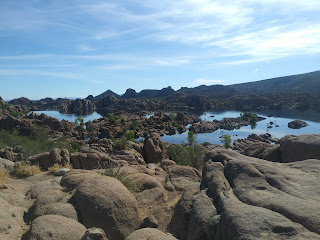
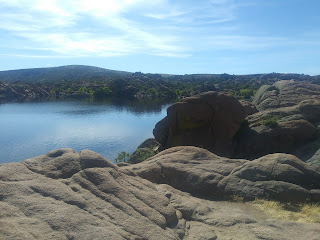
here, looking out from Thumb Butte trail at some of the northwest expanse of Prescott National Forest.

and here, a post-rainstorm shot of Willow Lake.

Monday, July 27

editing work and so-called "educational technologies"

it's not the most important volunteer gig in the world, but I am on the official Board of Copy Editors for a scholarly journal in the field of social work.

see? (I still need to have them update my institutional affiliation, I know. soon.)

the article I'm editing now is about perceptions of social work and advocacy organizations in Ireland. it's pretty interesting. part of the fun of this position is getting to dip my brain into current scholarship from another field, from lots of other perspectives. one of the pieces I previously edited was all about volunteerism-- something not unrelated to my own scholarship.

today I've been combing through this forthcoming article's reference list, checking for completeness and formatting. like most social science journals, this one uses APA style, which I'm thankfully pretty familiar with.

my editing process can be a little haphazard for a project like this. but generally it follows these broad strokes:

1. read through the piece once and make notes about persistent issues or anything else that stands out, tidying up a few of the easy things (commas, spelling, other punctuation) along the way
2. check that everything listed in the references is actually cited in the text, and vice versa (this is something I learned from Dr. Hawkins as part of her teaching in Bibliography & Research Methods many years ago)
3. attend to citation formatting (all the periods in the right spots, capitalization as APA dictates, and so on)
4. make sure all the headings and subheadings are styled properly (and I'd usually check tables and figures here too, but this particular article doesn't have any)
5. draft a makeshift style sheet for any judgement calls I get to make about hyphenation or capitalization of terms (these are always really informal sticky-note things, if that)
6. go through again, adding queries for the author where needed, making decisions and changes for the major issues previously noted, watching for consistency and fluency at the word- and sentence-level.
7. spot check one last time for the things on the style sheet, review the queries and comments to make sure they make sense, and then send the whole thing off after appending my initials to the filename.

if it's work for hire, I'll prep an invoice and send that along with my edits. I've done a huge amount of editing for hire this summer, it seems like. dissertation proposals, articles about orthodontics, computer graphics, and GPS, and even several book chapters about analytic software programs. but for this particular job I'm only getting paid in collegial respect and academic clout. it makes a nice line on my CV and boosts my ethos as a person with practical, ongoing experience editing. plus, I enjoy it.

there's about a day or two more of work left on the piece. the references and headings are sorted, so all that's left, roughly, are steps 5 through 7. from this point on, I shouldn't need to keep opening and closing the section on APA style at the Purdue OWL. it's down to the less tedious part of the job now. I could, I know, be a lot more meticulous about how I approach the work and how I track the time I spend on it. for now, this is what works for me.

the tedium of citation-tidying, I'll add, is pretty pleasant tedium. actually one of my favourite things about editing scholarly work like this is replacing all the default hyphens with en-dashes in all the page ranges of the references that have them. APA doesn't strictly care about that detail, but the beautiful differences between hyphens and dashes were irrevocably drilled into me back when I worked with the more comprehensive Chicago style at Texas Tech University Press.

style guides like Chicago and APA and resources like the OWL that grow up around them all count as educational technology, don't they? sure, the term is burdened with connotations of electronics, computers, digital connectivity, and such, but books are technologies too. I'd count these guides' paper-based versions as technologies just as much as I'd count their websites at https://www.chicagomanualofstyle.org/home.html and https://apastyle.apa.org/.

the Purdue OWL has always been a website, though its offline home, the regular Purdue Writing Lab, predates it by almost twenty years.

educational technologies. any technology that serves a process of education, right? well, one would hope.

about a year and a half ago, the dear Purdue OWL entered into a partnership with a purveyor of so-called educational technologies called Chegg. shortly thereafter, citation generator banners appeared all over every page of the OWL, offering quick and easy auto-citations in MLA or APA style. I reacted with great disappointment and irritation at the time. and so did plenty of other people.

since then, the powers-that-be over at the OWL have toned it down a bit. the citation generation tools are still there, but not on every single page. still, it feels odd. one tool, the OWL, gives students valuable reference information and examples and helps them learn to apply that knowledge in their writing. the other just black-boxes it all away and says, more or less, "trust us, we'll handle it, you don't have to think too hard. or at all."

I guess there are probably times when not having to think too hard about some process or technology is perfectly okay, but in academia? it seems thoroughly wrong. this kind of thing doesn't really serve education. does it?

such over-reliance on technology goes beyond students, too. a related "educational technology" here is plagiarism-detection software like Turnitin and other such tools. these companies give lip service to academic integrity and education, but their true goal is profit. they're invested in manufacturing some kind of vague ethical crisis so they can sell software subscriptions.

using software to catch students "cheating" is not education. it's barely relevant to education by any stretch of the imagination. and if you have to rely on such tools to figure out if your students are cheating on their writing assignments or not, then you haven't given your students or their writing enough of your attention, and you haven't designed very good writing assignments.

what has bugged me most about Turnitin and the like is the fact that it copies piles and piles of student work for its own databases and uses those copies as a core part of its function. and I suppose they think that because their terms of service say this is all perfectly fine to do, it is.

I say not. if students had any real choice in the matter, then maybe. but given the power dynamics of your typical college classroom, they don't. if their professor says upload your work via this tool, then students are more or less forced to do so, whether or not they care about the implications.

copyright is a whole mess in itself, but any logical understanding of intellectual property should acknowledge that students own their creative work, even within the relatively convoluted confines of formal education. for a third-party technology company to copy that work and profit from its application is pretty clearly unfair. unjust. messed up. all because some teachers are so worried about cheating they're willing to outsource part of their job to a for-profit company rather than design more robust assignments and trust their students half an inch.


for further reading:


Wednesday, July 1

day one, again

there are more days in July than in April.

okay, not by much. five years ago, in April 2015, I blogged every day for a month. it seems so long ago, looking back at those posts. when I was still in grad school and still single and wandering. I'd just come back from roaming around in Kentucky. I was taking lots of pictures of random outdoorsiness. I hadn't even decided about my dissertation topic.

2015 was a difficult year overall. not the only difficult year, but one that stands out. sometimes they seem to come on schedule, years like that. 2005. 2010. 2015.

it's 2020 now. there's still time for this year to be as difficult but it mostly looks like it's going to break the pattern.

now let's make a new pattern. every five years, I'll choose a month and blog every day. Sundays can still be reserved for art. the other days will be about so many other things too.

I'm already feeling the familiar percolating feeling of having ideas for blogposts bubble up out of nowhere. except it's of course not out of nowhere. it's everywhere-- the outdoors, the books, the news and opinions and everything else. not to mention the dozen or so draft posts I have to draw on if I feel like it. some of those might transform into real posts about public intellectuals, about the merits of owning material goods, about the word "community," about twitter threads and genre conventions, or about land and people and persistence. 

we'll see what happens.

for today, as a prologue, I want to note something about the tension I feel about all the free time I have this summer to make art, create things, to play around in various media. in May as the summer was just getting started I thought grand thoughts about all the art and crafts and making I'd get to do in late June and July and early August. I could make some art to put in those semi-useless wooden frames. or I could convert one of the frames into a loom and learn to weave. I could plan and embroider a better boardgame board of hexagons for The Plaid Identity game. I could knit something I've never knit before. sew a pair of trousers I've been meaning to sew for months and months. I could get more plants. I could practice my old violin.

there's still time for some of those things. it's only July 1!

but especially about the less practical art projects on my list, I face a skeptical interior voice of endless questions. do you really need more bits and scraps of art lying around? what would you do with that colored-pencil sketch even if you didn't end up hating it when it was done?

sometimes I manage to ignore that voice. making useless art is still okay. it doesn't matter a ton what happens to it after the making.

some of it will get blogged about. like this zine-esque poem thing:

"Sometimes / a Rich imagination / hides at the beautiful hint / of what can make you love. / find importance inside it -- / looped over / expandable / lasting and / binding "for this / add some red / as needed."

the words are from a very old scrap of a Better Homes & Gardens magazine, found with some other art scraps in a folder that my mother unearthed from the basement some months ago.

amid the smudges of various oil pastels, the collage of words says

"Sometimes / a Rich imagination / hides at the beautiful hint / of what can make you love. / find importance inside it -- / looped over / expandable / lasting and / binding
"for this / add some red / as needed."

it'll probably get lost in a folder or a box somewhere until I unearth it years from now. it'll mean something new then. but it will still be something I got to make.

Sunday, May 31

summer is for being outside


they call this piece of geography The Granite Dells. from a distance, the rock formations look like orange mounded towers guarding the water, huddling together in confident solidarity.

we currently live less than three miles from this gorgeousness. every time we drive within view of it I gape at how striking and beautiful it is. how grateful and happy that view makes me.

on Wednesday we went wandering around some of the trails out there. there were lizards scurrying about, and we saw a few rabbits. also a disc golf course, but that's not as cool.
someday we'll find a canoe to borrow and spend a day out on Watson Lake, hopefully not getting sunburned.
someday we'll plan a weekend of camping somewhere out here in this beautiful desert, whenever the National Parks decide to open their campgrounds up again.

Saturday, November 30

Thanksgiving retrospective

this week, we are baking and eating and family-ing in Chicagoland. Chicago itself, over to the east of here, has a famously wonderful city flag. the state of Illinois... not so much. its flag is okay, I suppose. it could definitely be uglier.


last Thanksgiving, we stayed down south in our current Louisiana home. its state flag is pretty distinctive, so it would probably win a flag contest against Illinois any day.

how would Louisiana's fare against Indiana? or Texas? (I never did look up Rhode Island's state flag when I spent Thanksgiving there in 2013. it's actually quite well-designed. possibly more beautiful even than the Texas flag.)


anyway.

family-ing in Chicagoland over the last six days has involved late nights playing Rocket League, grocery shopping with grandma, tons of reading (I finished The Subversive Copy Editor and In Watermelon Sugar in the last two days), and endless football games on the television. right this moment, it's the college variety: University of Utah Utes v. the University of Colorado something-or-others. (Buffaloes, the internet tells me.) 

I am more or less ignoring the football and poking at bits of work. budgeting work. emails. edits. to-do lists. the husband is napping on the couch next to me, murmuring nonsense in his sleep. the dogs are lounging (except when they're fussing mildly at each other). we'll eventually have one last dinner of leftovers, re-pack the suitcases, and get ready to drive home tomorrow.

there are two more weeks of the semester. so much to be thankful for. 

I am especially glad for time to rest, for the hospitality and coziness of family, for memories and togetherness, and for all the places (remembered and imagined and inbetween). 

this decade has had a lot of big, wondrous stuff in it. how much I've seen and learned and changed since ten years ago. you too, probably.

now how much more learning and growing and living can we fit into December?

Thursday, June 27

images, tendencies, and commandments

the local public library is doing free Monday night yoga this summer, led by one of the proprietors of this local yoga place that I haven't yet visited.

I've been to Monday night library yoga twice so far. it's nice. last week, I lay there and breathed and thought a bit about about my ideal self.

Stars
{ image borrowed from this kind soul on Flickr

past versions of my ideal self have taken various shapes and sizes and attitudes. but one thing seems to always happen when I think about this future maybe-barely-realistically-attainable person. I think about what she looks like. 

draped over an armchair. surrounded by books and children in a sepia-looking library. wearing comfy (but very stylish) grey loungewear. surrounded by plants, accompanied by a fluffy orange cat and a cup of tea. dressed in homemade and perfectly-tailored dresses. slender but not too tall of course. curly (not frizzy) hair in a perfect messy bun. the perfect pair of glasses on a thoughtful face with a flawless complexion.

why is most of what I think about when I think about her centered on what she looks like? dresses like? what her body is shaped like and how her hair is styled? I picture her in short bursts of vivid-- with this kind of dress. that kind of toned abdomen. a certain kind of skin.

why don't I think half so much about what she does? how she spends her time and energy?
I do think about that too. but it's less easy to fixate on. visuals are easier. for some reason actions don't print themselves so firmly on my thoughts. they don't fit into the short bursts.

why not?

{ favourite oatmeal-chocolate-chip muffins } 

I’ve read so many blogs that have praised Gretchen Rubin’s The Happiness Project. Smacksy is the one that comes to mind most readily at the moment but I'm 76% sure I've seen the book mentioned by at least twelve other bloggers, too. 

maybe I'll read it someday. (probably not really though)

for now, I'm skim-reading Rubin's blog. which I came across not long ago, as one does, via another blog entirely, when a fellow-academic on twitter linked to this handy blog about building robust academic writing habits, in that post, under habit #6, there was a link.

this link: The Four Tendencies Quiz.

academic writing habit blogger, Dr. Katelyn Knox, advises that knowing what your tendencies are when it comes to meeting expectations (whether your own or other people's) is helpful for knowing how to nurture good habits.

so I took the quiz, and at the end I was supremely interested (though not really surprised) to learn that I am a Questioner.

of course I am. I would have to be, eh? (I suspect that most of my family members are also questioners-- we like to understand the reasons for doing a thing before we're gonna set out and do it.)

now, I know very well from skim-reading the rest of Gretchen Rubin's blog and website that she is using this quiz and her blog and her online presence generally to sell books and to book speaking gigs and such. and books with titles like "The Happiness Project" pretty much always sound hokey to me. it seems sales-pitchy, snake-oil-y, just a little bit. "buy my book! be happier!" yeah, okay.
but I'm also not unconvinced that there is value in these ideas. the knowledge that I tend to Question before I commit to any course of action or acquiesce to any expectations about how I should do things is kind of eye-opening, however much it also confirms what I already know about myself. it seems like there’s something to it. something insightful, something that feels mind-expanding and practical. it’s not The Answer or The Solution to anything-- no silver bullet-- but it is a starting point, perhaps.

elswhere on Rubin's blog there is a post about writing custom personal commandments for your life, as aspirational guideposts or whatnot. maybe this is hokey and maybe it's helpful. it can be both at once.

the first custom amelia commandment that came to mind was "always whip your own cream," which is an easy one, but also a synecdoche for my general preference for homemade and handmade stuff. if there is ever a plastic tub of cool whip in my kitchen, it will not be because I wanted it there.

it's kind of fun to try thinking of personalized commandments. I could probably articulate a few unconscious ones I follow already, about word usage and getting enough sleep and such.

maybe "take photographs of your old beat-up shoes" is another one I could formally adopt?

{ black flats from Goodwill }

{ polka-dot flip-flips from a Ross in Hawaii }


last week while I was laying in savasana at the end of yoga practice at the library, letting my thoughts drift, I thought of one more custom commandment: refuse the numbness. I guess this one is also shorthand. it's about a deep hope that I'll always be able to be surprised by things, to be affected by things instead of jaded and uninterested. that I'll always be able to listen to the universe sending me messages about itself, about me, about everything. it's easy to let default mode take over, but I don't want that. I want to always be looking for connections, finding things to care about, practicing sensitivity to the world and what I can do in it.


Friday, April 19

playing opposite

thinking today about the word "work," particularly all the times it gets linked up as a prefix or suffix to other words.

so I made a list (it's not as comprehensive as this list, but oh well). it would surely look better as a wordle or other word-art-blob, and maybe I'll eventually use this list to make such a thing. for now, it is merely a list.

coursework, coworker, co-working
framework, meshwork, metalwork, network
paperwork, post-work, workaround, workbench
workday, worker, workflow
workforce
workout, workplace, works cited, workshop
workspace, workstation

(I know "works cited" isn't a single word, but the idea is a single idea, and its particular sense of the noun is intriguing today.)

someday I'll go look up the etymologies of all these words, too. what history do they share? what do they not share? and why?

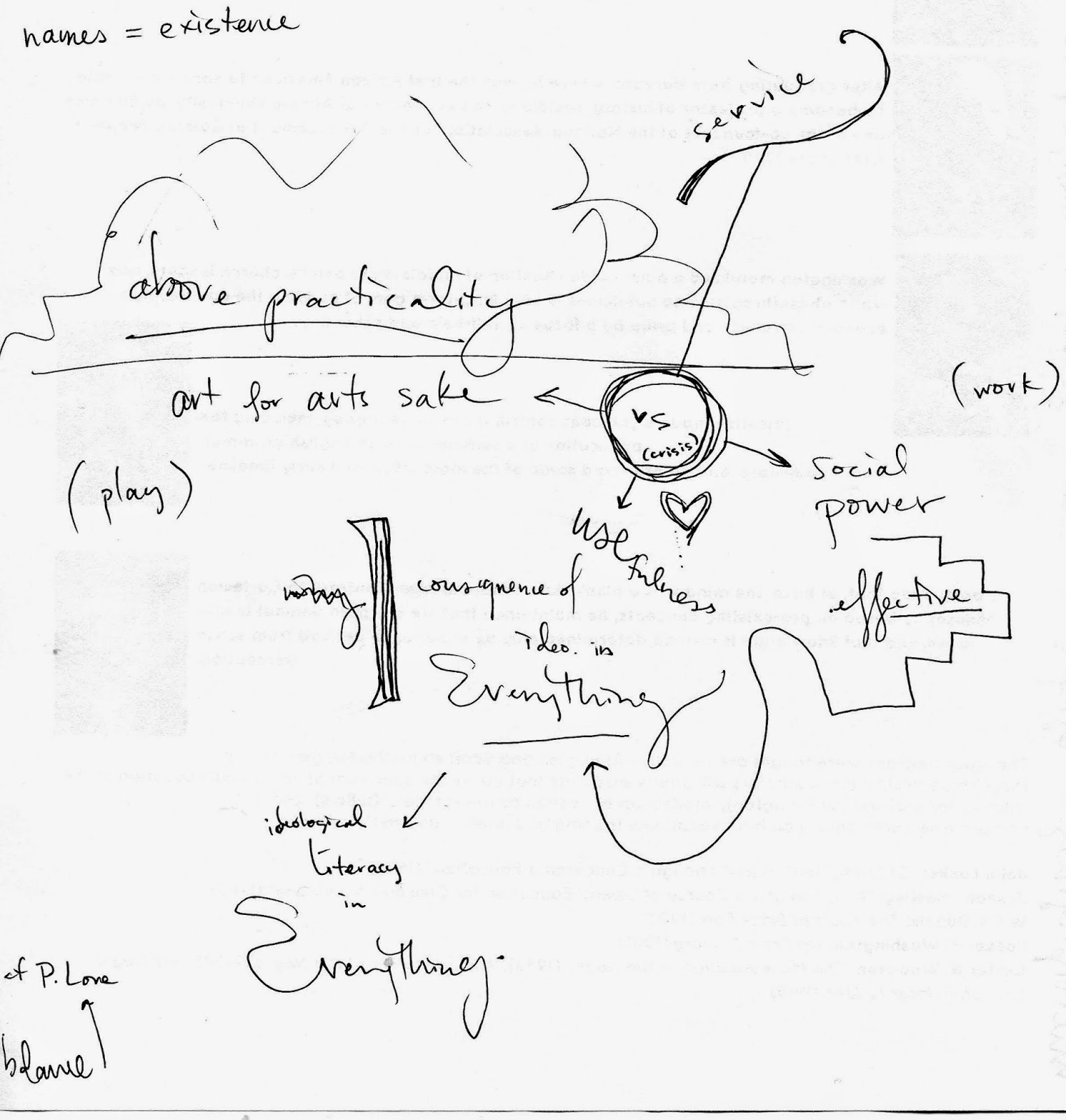
scribbly doodle with phrases like "above practicality" "art for art's sake" "ideological literacy in everything" "service"

something else I'm thinking about is all the stuff that isn't work, or the stuff that at least gets talked about as the opposite of whatever it is we mean when we talk about work.

work vs. play
working vs. unemployed
going to work vs. going to school
hard at work vs. taking a break

and then there are all the synonyms for work. labor. effort. striving. functioning. succeeding. trying.

the word (or suffix or prefix) "work" shows up in my (newly resurrected) file of daily writing 1183 times. I sense that the word, its synonyms, and whatever we mean by it are all going to show up a lot in my future scholarship. my scholarly brain is quite obsessed with the concept lately. partly because
of dissertation residue and many of the ideas I reference in this piece, and partly because in the past month or so I've been consumed with Asao Inoue's book Labor-Based Grading Contracts: Building Equity and Inclusion in the Compassionate Writing Classroom.

I have so many thoughts and so many tenuous hopes that the thoughts might connect into something bigger. if there are meaningful lines to draw around and among the ideas of working to learn, working to live, working to play, workplaces, networks, and the ways we share the world with a million forms of black-boxy technology, then I'm going to find them. write them.