Showing posts with label fear. Show all posts

Monday, January 31

accomplishment

today, after having planned to do so for some weeks, I printed out all 24 of my scholarly publications, starting from the oldest book reviews from graduate school (one in this international tech comm journal and one over here), all the way up to my most recent conference proceeding. there are almost ten years spanning all this work. it all fits neatly in a manila folder.

there is more to come. a book chapter on Twitch.tv and user experience research. a short piece on blogging as a ritual of self care. more conference proceedings, possibly.

scholarship is not all I spend time and effort on though. especially lately. speaking of self care... part of my self-improvement journey this past several months has involved finding value in more than mere productivity and work ethic and professional accomplishment. it's difficult to even see how those attitudes have made up (and still make up) so much of how I've been conditioned to see myself. moving beyond that mode is not easy.

but I am trying. not everything needs to be conventionally "useful," after all.

even though I take on the role of a tool within the mechanisms of capitalism in exchange for a paycheck and health insurance and such, I can put that role aside and instead, for a moment, become nothing more than a tool for inhaling and exhaling and pondering the universe.

or I can be a tool for reading and interpreting knitting patterns. or for absorbing and reenacting step-by-step yarn-spinning tutorials. (I'm learning to use a drop spindle, see? it's fabulously difficult and not, all at the same time.)

my ravelry project logs tell me I began this shawl sometime in July of last year. six months later, at the beginning of winter break, I finished it, after restarting the whole thing twice, after ripping back to the stockinette section at least twice, and after doing way too much math to customize the number of lace repeats. 

when I'd finally gotten through the first lace section and moved on to the final border... I noticed a couple of wonky twisted stitches that messed up the pattern pretty obviously. instead of purling the stitch then the yarn-over, I'd done them backwards and mucked up the eyelets. (it was only a million hours later that I figured this out exactly. proofreading lacework is a skill I'm not an expert in).

I had wanted to finish this shawl for October. for Thanksgiving at least. for early winter. but now it was almost Christmas and I had a terrible choice to make. could I live with this mistake? or could I not? would anyone else ever notice these backwards stitches? would I even notice them most of the time, as long as the shawl was keeping my shoulders warm? or would the mangled lace haunt me forever if I didn't fix it now?

I'd already torn out so much work so many times. did I really have to undo more? was there any way to avoid another frustrating round of backwards progress? 

this, by the way, is why you're supposed to check your knitting more thoroughly as you go. you're supposed to catch this kind of thing way before more than a whole new row of stitches separates you from your mistakes, let alone half a dozen.

I decided I couldn't leave it. I wanted the lace to look impeccable. so I experimented on my own, trying to work down to untwist things just in the sections where it needed it-- but this made things irrevocably worse. with no other option but tearing back 8 whole sets of knit-purl lacework, I began a desperate search for any documented knitting wisdom I could possibly trust to guide me out of this disaster. Ravelry comment threads. knitting forums. youtube. I pleaded with them all for an answer.

most of what the internet had to give me were tips on how to knit proper lace in the first place, not anything on fixing lace that you've messed up. but finally... somehow... with mere ounces of hope left that there was any reasonable solution for undoing whatever I had done... I found that Suzanne Bryan had a short video on exactly what I'd been looking for.

this video tutorial was everything. I curled myself around my phone screen almost breathless as I watched it, my mind doing somersaults as I realized this could work. it could work! if I could follow the method just right, and keep track of all the ladder rungs of yarn, and not undo more than just the one section...! this would solve all my lace problems. it was brilliant.

so I scrambled to fetch my spare circular needles and cords, carefully and excitedly knit backwards to the problem section, re-watched the relevant video clips twice more, and then started pulling stitches off.

it was a mess.

it was highly stressful, my fears and hopes in the utmost tension as I worked.

I had to keep going back to the pattern's lace charts (even though I generally stay far far away from the snaking codes of any knitting chart if I can ever help it) to pinpoint exactly which bit of the lace I could leave as it was and which bits needed re-making. I had to count and re-count how far down my mistake was and how far over from which edge of the scallop. 

counting is the hardest part of knitting.

but once I had it figured out, I just had to keep swapping the size 6 needle points from this end of their cord to the other so all the re-stitched stitches would be the right size. and it worked. I reconstituted the two tiny sections into perfect lace, paid very close attention to all the mistakes-waiting-to-happen in the remaining few rows, and finished the shawl the evening.

why was this lace-repair adventure so absolutely thrilling? I'm not sure. there was some risk that I'd again just make the mistakes even worse. there was the novel weirdness of loose yarn-spaghetti draped precariously between everything else.

it wasn't easy, but it was exhilarating. Ms. Suzanne Bryan's claims about her lace-fixing techniques are 100% correct. if you manage to complete a fix like this, you feel utterly bulletproof and infallible for the rest of the day. 

-

why does this small saga of knitting woe and triumph deserve documentation in this little blog of mine? I don't know if there's an answer, other than my typical interest in capturing bits of experience and emotion in as vivid and accurate description as I can. I like to write these vignettes of where and when and how, with all the metaphor and adjectives they need to vibrate satisfyingly from my imagination to yours. 

as for the finished shawl-- it's nice and cozy and blue. I've worn it a few times, even. but for me, the process of knitting is the fun part. the satisfaction of transforming material from one state into another state is undeniable.

thankfully, everything is a process from a certain perspective: crafting, learning, scholarly-research-agenda-ing, fire, and people too.

Saturday, October 17

nothing momentous

can these miscellaneous photos become something else if I throw them together in a blogpost today? can they tell a real story or scaffold the lines of a poem?

for me there are wispy old memories inside each one. the past curls up, loose and wriggling, in little mental pockets marked with "autumn 2015" or "July 2016" or "that one conference in Rochester, NY."

but what are they for you? 

evidence? or art? or both? it probably depends on who you are.

plants in a garden. plants on a windowsill.
all in the middle of growing, dying.

or both. 

all of it part of some cycle. up. down.
rainfall, rainbows,
showered on or sheltered from.

or both.

writing or drawing, or both. seeing or listening, or both

being or breathing. 

but not or-- and.

always trying for and.
or failing. 

or both. 

along with the wispy memories, there are deep and unpredictable tides of emotion, too. a longing for the pieces of these pasts that have faded too far. a fear of losing all the people and connections that once felt so close and certain. amusement and nostalgia drizzling from clouds of wonder about why everything feels so impossible.

Monday, September 7

separately solemn: fall semester 2020

today begins week three of my first semester teaching at Embry-Riddle Aeronautical University. I am the newest Assistant Professor of Professional Writing in a department without a degree program. students here can get a minor in Humanities & Communication, but nothing more. since they all want to be pilots or engineers, that's how it is.

I'm teaching two courses, three sections, this semester. one of technical writing and two of business writing. there are 62 students enrolled altogether, which might be the most students I've taught at one time ever.

COM 221: Technical Report Writing
this one is quite reminiscent of the English 421 I taught once at Purdue. for the most part, I've kept this course very similar to the technical writing and technical composition courses I've taught for the last two years. but for our final project, I'm finally going to teach some podcasting stuff. finally. 

COM 222: Business Communications
if Com 221 is the English 421 of ERAU, then Com 222 is the English 420. though the distinctions between professional/business communication and technical communication aren't so very huge, they do exist. it feels like ages since I've focused on the former. so I'm resurrecting some of the projects I taught back in 2016 and 2017, updated a little, with a new textbook to go with them this year. cause-related marketing proposals. very exciting. 

overall, Embry-Riddle feels like a mini-Purdue in many ways: engineering-heavy. mostly white and privileged students. the differences, however-- that it's a much smaller private university, perched on top of a desert-- are significant.

how many college campuses have I spent how many autumns, now? this will be the sixth campus (USU, U of Plymouth, TTU, Purdue, NSULA, and here). I don't feel like counting the autumns themselves just now. someday maybe I'll make a chart.

cottonwood_trail_20191110_119

{ photograph borrowed from this kind user of Flickr }

true autumn weather is a month or so away, still. but regardless of weather, classes have started. and that comes with a particular and lovely feeling.

only... it's different this year. and I don't think it's different just because I'm getting old. 

something like the same old scintillating energy of a college campus in September is here, jolting through brain and body every now and then. but it's so muted. six feet of space (give or take) has diluted it. closed office doors and silent office hallways are smothering it. I didn't know the trademark thrill of any given academic autumn would be so vulnerable to the side effects of separation.

after a summer of moving and reading and blogging and not teaching anything, my teaching muscles need re-building. it might take me longer to find a workable rhythm this semester. 

talking for 4+ hours (thank goodness not completely consecutive hours) in a cloth mask is exhausting

keeping track of two separate classroom cohorts for each section I'm teaching is a little hectic. 

finding my place in a new institution is tricky enough, without such strange circumstances. what with all the reasonable but seemingly unending surveillance and daily temperature checks and stern, scolding emails from administrators and wobbly hopes tossed about on fathoms of uncertainty-- it's so easy to be so panicky. and almost as easy to sweep the panic into a corner and pretend like it's not there at all.

it makes me wonder, again and again, what really matters anyway? 

I'm thankful, for now, for patient and smart students. it's a weird time for all of us. hopefully we still learn a few things that will still matter beyond this semester and next.

Wednesday, February 28

deadly light

we searched out an audio-short-story with which to pass the time on our way to and from Chicago several weeks ago. it was "The Call of Cthulu," by H. P. Lovecraft, streamed on Spotify. it begins with a few lines that I've since thought about over and over again:
"The most merciful thing in the world, I think, is the inability of the human mind to correlate all its contents. We live on a placid island of ignorance in the midst of black seas of infinity, and it was not meant that we should voyage far. The sciences, each straining in its own direction, have hitherto harmed us little; but some day the piecing together of dissociated knowledge will open up such terrifying vistas of reality, and of our frightful position therein, that we shall either go mad from the revelation or flee from the deadly light into the peace and safety of a new dark age."

I've been writing (in what is shaping up to be chapter 2 of a sure-to-be-marvelous dissertation project) a little bit about what Lovecraft's narrator here describes as a terrible horror--the distant someday when knowledge from every possible corner of the world will finally be pieced together into a comprehensive whole. such a vision is what plenty of people seem to be working toward now. Wikipedia founder Jimmy Wales boasts that the the Wikipedia project will make it happen. The Internet Archive founder Brewster Kahle insists that such a thing is more than possible. in 1926 when "The Call of Cthulu" was written, I expect it didn't seem quite so possible.

despite all the fancy internet-connected technologies that make access to information so incredibly and amazingly simple compared to how past centuries must have done things, I do have rather many doubts about whether access to knowledge could really ever be comprehensive and universal. knowledge isn't quite the same as information, after all. and whether or not it'd be easy to gather up and store some version of all the knowledge any human has ever professed to know, what would that actually look like? and how would one actually interact with it? I have a feeling that human knowledge is so diffuse and multiple and embodied that it can't ever be summed, can't ever be so singular as to be stored in any static form. no matter how interdisciplinary things get, all the kinds of knowledges out there in the world will always be in some way dissociated.

but it is interesting to imagine it differently. to dream for a moment, with Wales and Kahle and Lovecraft, that all the edges might someday match up.

and if they ever did, and if we dared to let ourselves read through the everything, would we really go mad?

or run as fast as we could back into a blissful pool of ignorance?

or both? or neither?

Thursday, October 8

still somewhere


{ a corner of the University of Wisconsin campus in Madison, Wisconsin. late summer 2015 }

heart in my throat.

that's a cliche figure of speech, not one I've used in description before. choking on your own life, your own inner core. very cliche, but it feels new to me. and maybe all the idiom dictionaries say it means extreme nervousness or fear. for me though, that part of the cliche doesn't apply. this feeling is not connected to the mild terror I feel about having to decide--actually decide for my very own self in some very focused and purposeful way--what to write a dissertation about and then figure out which faculty members will best be able to help me write it. this heart-in-my-throat-ness is rather a feeling with no meaning. not nerves, not fear, not sympathy, not sadness.

surely it's connected to something, but I cannot tell what.

this, starting this fall, is year three.

it's been a long summer, a long year. a long way since January and home and crafts. I have not stayed in one place like this since... oh goodness-- even this long in one place? in one town? it was early 2002. high school. I was eighteen. three years isn't so long. three years isn't hard to look back across. but since my long-ago high school life it's been snippets of much less time:

one year in Logan, Utah
one year in Exmouth, Devon
two years in Logan, Utah
three quarters of a year in Kidder, Missouri
half a year in Seattle, Washington
eighteen months in Alberta, Canada
half a year in Seattle again
two years in West Jordan, Utah
two years in Lubbock, Texas

and now...

now it's year three of my phd. three years in this cozy Lafayette, Indiana place. three straight years with only small breaks for visiting parents and siblings, for wandering in new cities and new woods, and a bit of going to conferences.

plenty of the things they told us about year three have proven true enough. I am in a daze and not sure where to work, what to focus on. I do feel very daunted. shaky about the future, even the future of three weeks away. I am sick of coursework on a level I did not think would ever be possible. even posthumanism class in some moments seems to slap me across the face with impossible drudgery.

I left the book in my office or I'd take a photo of this, but you'll have to trust me that on its last page, at the end of what Katherine Hayles has to say about How We Became Posthuman, I penciled in an awe-struck "will I ever write a book like this?"

and underneath that: "how?"

our next book for posthumanism class is Karen Barad's Meeting the Universe Halfway: Quantum Physics and the Entanglement of Matter and Meaning.

I have read the preface and am already asking, again, "will I ever write a book like this? could I?"

a phd is supposed to be daunting, I guess. they don't want to hand them out to just anyone. you have to climb a good number of very tall staircases. wondering. climbing. uncertain. climbing. reading. climbing. writing. wondering.
“There are no solutions; there is only the ongoing practice of being open and alive to each meeting, each intra-action, so that we might use our ability to respond, our responsibility, to help awaken, to breathe life into ever new possibilities for living justly.”
   — Karen Barad. Meeting the Universe Halfway (x)

Friday, June 19

paused

disappointment paralysis: when all narrativium sloshes from one side of your life to the other and spills away uncontrollably, leaving you to tremble at the center of it and wonder where the story is going. when things aren't making sense, nothing is fitting into a plot quite yet and there aren't any conflicts to address (they've all walked remorselessly out the door on you) and you can't find any of your props (they've all misplaced themselves in distant, locked rooms) and your character list seems suddenly erased (subject to immediate and serious revision for no reason at all).

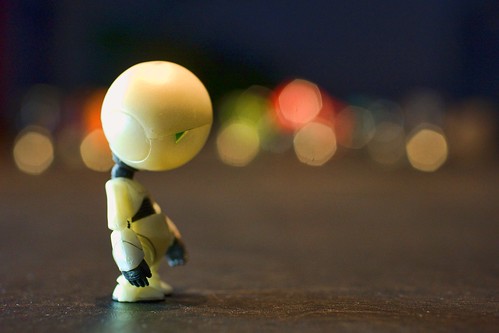
it's a feeling I can't quite keep in my head to describe. a robotic feeling. a half-turned-off immobility of a sort. a creaking passionlessness attended by drifts of lethargic, unmotivated thoughts. from that place it seems like the story will never un-empty itself back into any useful channel.

have you ever felt like that? like you could almost relate to this guy here?
Marvin, the paranoid andriod
{ photo by this kind soul on flickr. }

but seeing all these June lilies in all their gorgeous smeary, speckled orange...
even if they aren't my favourite flowers, seeing them everywhere has been sort of awakening.

they didn't show up in any bouquets. they just seem to be in everyone's yards this time of year. nodding and swaying and sprawling because it is June and they are June lilies. and in my noticing of them there is something not exactly, but almost sort of akin to what the flowers at the bottom of this old blogpost had to say.

by itself it isn't much. but it makes the ramshackle haltedness and sticky ground where we are feel more like a pause in the story arc than an utter abandonment of it. flowers and fireflies. still worth smiling about.

Monday, April 13

thirteen: unlucky

not even the heady scent of fresh-mown grass or the sweep of springtime clouds and breezes--not even a strawberry ice cream cone--none of it, nothing--has succeeded in lifting me up out of this well (deep, deepening, deeper than yesterday) of what if why not when where how not why which who why why not but why. I am choking on feelings. smothering.


there are no stories in this. no sense. the universe is sinking me.

Sunday, April 12

twelve: slip step


I have decisions to make about next fall. about the next phase. about where this academic funnel is really going to take me.

they feel like crushingly heavy decisions. (I wrote 'are' first. and then revised. 'feel like' is more true. ...unless there really isn't a difference? hm.)

somehow they will get made though. and they might be wrong decisions or they might be unwise decisions and I will most likely end up missing out on something or other...

no matter what gets decided, whether I choose this or that or try to juggle both somehow, or whether I flip a coin or throw a dart or take your advice, there will be some other thing that could have been. inaccessible alternate realities and all their teasing, rose-tinted fanciness.

but that's how everything seems to work. in pieces, in slices, where you can't see the other side and there is no way to rewind or restart.

Monday, April 6

six: but too soon for bare feet

today was quite grey. I am weighed down with exams to write and books to read, review, takes notes on. this time of year--it is excruciatingly stressful and/or teasingly wonderful and/or wrackingly mixed. depends on the day.

I am wanting to rearrange furniture, and walk outside in the rain, and sing or dance or leave. 

but I have exams to write. 

this song and Jason Mraz's very nice voice accompanied me home from the bus stop earlier. the match of grey anxious twilight longing seemed beyond perfect.

Friday, April 3

three: unlearning

I shared this quote with my students this week, pulling it up right here where it lives on the little tumblr quote blog I keep. (who even knows what the students thought of the fact that their English teacher has a tumblr. are tumblrs cool anymore? were they ever? does it matter?)
“the most successful of our students have a worldview shift during our program, an entire change in their demeanor towards the built world around them. They come to see rules as malleable, power structures as changeable, and culture as embodied. They see design as a vehicle for slow but influential behavior change, and they recognize that over time, this behavior change impacts the landscape of the world. Over the course of the program, they see that they can design things (products, services, interactions, and policies), and these things cause the world to change.”
the quote is from this piece by Jon Kolko. he is interestingly the Vice President of Design at Blackboard, and Blackboard is the online course software I've been using to teach my writing class. my twenty students are analyzing space and the rhetoric of the built world around them. I am asking them to break apart the ways staircases and windows and furniture send certain kinds of messages. I want them to see that the way things are is not an accident, nor is it inescapable. the first step is paying attention.

reading Kolko's article made me feel a few millimeters better about my teaching. that failure and frustration are okay--that they are even crucial in the learning process--is something I always forget. or don't think about. I get too idealistic about the whole endeavor, too enamored of that Dead-Poets-Society-style magic, and then when almost nothing about the five hours a week I spend in a classroom every semester actually goes so smoothly or culminates in such exciting epiphany, teaching becomes very meh.

there are other articles and bits research and pedagogical theory I've latched on to with similar reaction. Robert Brooke's “Underlife and Writing Instruction” is one. the little summary comment-note I added to the top of my pdf copy includes the line "I found this very, very comforting."

teaching is hard. and it seems like we talk about it too much in extremes. that lesson you planned either falls on deaf ears or it lights up with fantastic sparks of insight. or maybe it's just that I selectively remember those extremes. class time is great or it's awful. we are either completely failing our students or we are doing all the right things for them. and our students are either complete slackers or overachieving superstars. these extreme stories are the most fun to tell, after all, whether to yourself or to your colleagues.

there are a million other stories.

learning doesn't necessarily happen on paper and it doesn't have anything to do with points for writing smooth transitions or points for drafting a logical thesis statement. it doesn't have much to do with the lesson plans you scribble in your notebook or the not-so-fabulous teaching evaluations you get.

I need to remember that getting things wrong and messing things up and wandering around on the wrong track are all useful learning activities. failures are probably more useful than "perfect teaching" or "perfect studenting" could ever be (not that either ideal is at all easy to imagine, from here). my frustration and faltering with this teaching gig... that's part of my own shift, too. don't forget. the failure is useful, for them and for you.

Wednesday, October 8

the world we are creating

if there are things you love on the internet, save copies of them. this is advice that Dr. Sullivan is alway giving us with respect to our wandering research. if you even sort of think you might want to use it someday for an object lesson, class project, seminar paper, conference illustration, or article-fodder, download the thing. as endless and un-erasable as the internet seems most days, the stuff of it doesn't always stay there. you cannot trust the cloud.

(whether you can trust the integrity and/or longevity of your harddrive to any significantly greater extent is a separate though not unrelated question. all is temporary, and the scales of temporariness are complicated.)

if there are people you love on the internet, I don't know what to tell you. so far, there's no way to download people. that's probably a good thing.

early thismorning I saw people linking to a new post by Kathy Sierra. it is a long post, personal, a tad meandering, but it seems everso soul-questioningly, heart-wrenchingly important.

read it. go on. I've linked to it twice now, redundantly, asking you to read this long meandering story even if you have not been a Kathy Sierra fangirl since at least 2005, and even if you have no clue who this Andrew Auernheimer fellow (hm... he blogs on livejournal. how old-fashioned...) might think he is, and even if you, like me, find life much more effective without worrying very much about the hopeless-seeming, headache-inducing state of the universe.

Sierra's post might not be there very long. I have made a copy of it, in case the original disappears. it's also on Wired, for the moment. (if Wired and Dropbox disappear, who knows what we shall do).

two-thirds in, Sierra shifts into saying we. "This is the world we have created."

not only does that make us sound so implicated, so conspiratorially close to culpable... it also makes us sound so finished. so final. we've hit send. we've checked enough boxes. the world has been published. editing is over and this is the product we're stuck with.

not so. please, not so. I'd rather say "this is the world we are creating."

the we is still there. I don't see any ways of getting around that we, though parts of me are tempted to pick we apart and subdivide it into some sort of graph with axes like experience, influence, responsibility, investment, and such.

all the other words could stand to be picked at too. which exact this? creating how?

in one of those neat serendipitous internet moments, the following video was posted today. Mr. Rugnetta says a few things on cultural (re)production that answer that last question. the how is discourse. pens, not swords. writing and media, not sticks or stones or construction equipment. it's actions too, of course, but what we say about how we act, and how we storify things that happen = way incredibly powerful. Sierra's story similarly notes that stories with enough inertia and spin can permanently warp one's perspective. even the most disturbingly inaccurate stories, like the kind you might hear about scaly, murderous llamas, can stick in your head and tint everything you see. all the Pratchett you've ever read will say the same thing--narrativium is not to be trifled with.

I wonder sometimes if the stories we tell about the stories we tell carve ruts as deep or as damaging. those are thoughts for future blogposts, I think.

as long as I'm being redundant today, I'm going to include another video--yes, more of this silly Rugnetta fellow and his ponderings. it's relevant, I promise. and the followup comments/responses over here are also enlightening and chewy. (my brain has been particularly hung up over the 8:40 mark. it's a part of me that's been trained to meekly accept and swallow all things as somehow divinely-permitted-side-effects-of-this-fallen-mortal-experience-which-will-ultimately-all-work-together-for-my-everlasting-good that wants to say, "yeah, shrug off those death threats, everything will be fine." what does that mean? who does that make me? am I supposed to squash this attitude? or unravel it away? maybe all I can do is wait to see how I actual feel when or if death threats are ever made in my direction, and keep my mouth shut about the concept until then.)

anyway. this whole situation--trolls, women, internet, life--is more than a story. we can uses stories and conversations and videos and blogs to reach out for little parts of it, and build what we see into some sensible structure, with sections and headings and terms lined up for convenient deconstruction. but labels make me squirm, generally. what we mean by troll and or victim obviously isn't easy. it's not even always useful. the definitional blurriness between criticism/harassment is another thing that might deserve plenty of more discussion. my own experiences of such things aren't the same as anyone else's. that's why we need to tell the stories, after all. that's why we invented ways of sharing all the crazy insides of our heads.

maybe all this talking and thinking will help. somehow.

Monday, September 22

inhale envy

Saturday I was out running errands (legitimize the new car, donate all those excess clothes, pick the last two zucchini from the garden plot) and had a few moments to kill in between places of business that open at 8:30am on weekends and stores that didn't open until 10:00. Barnes and Noble presented itself, conveniently in between these times, and I wandered in to browse.

my favourite shelves in bookstores are the ones with the blank books. there's only so long you can gush over those, though, so I also explored the games aisles and the news aisles and the clearance bins. there were tempting boxes of chocolate in the clearance bins... but I was only there to kill time, not spend any money. I'm still subsisting on the tail end of tiny slash nonexistent summer paychecks, so I'm putting off as much spending as possible until next month.

my other favourite shelves are the ones with new books. Barnes and Noble has one of these too, perpendicular to the coffee-dispensing section of the store.

I picked up and perused the first pages of a little paperback with a yellow-pea-coated girl on the cover. white block letters, out-of-focus trees in the background. it was the title that caught my eye. The Opposite of Loneliness. Marina Keegan. Introduction by Anne Fadiman.

I must admit I didn't remember any of that information over the weekend. I didn't remember what it was called or what it looked like or how it was bound. all I remembered was the twist that jumped out from the middle of that glowing Introduction by Anne Fadiman, and the reason I put the book down.

but in order to write about that, I needed to remember all the other details. an isolated, poignant twist with no detailed context wouldn't quite be a story worth telling, would it?

as anyone else would have in this forgetful situation, I turned to the world's favourite (or least favourite?) external memory aid slash search algorithm.

these are the words I ventured to feed into the search box:

writing student dies dead student publishes collection

and there I've given away the whole sad, slow, sinking, twist, so there may not be much hope of painting for you the sense of holding a lovely book of essays in your hands, of reading along about the quirks and dreams and pleadings of its author, starting to wonder, to envy, and feeling even a bit anxious to skim through this Introduction and taste the insides of this collection--to traipse right into the essays this student of Anne Fadiman's must have had such writerly fun drafting and polishing...

...and then realizing, without knowing why it took you so long, that Anne Fadiman's past tense was is not the regular, innocent past tense was.

I snapped the book shut and half-tossed it back on its shelf, not even bothering to straighten it up with its fellow copies.

her last Yale Daily News column comes up first in the search results.

a Huffington Post eulogy-esque review (or is it more a review-esque eulogy? I'm not sure) is second.

I'm not sure what made me so suddenly give up on that shiny new book. maybe, after hearing so much praise and promise, it seemed unfair. maybe the praise and promise seemed pasted-on and obligatory to me, too thick, once I knew their recipient wasn't around anymore. I felt cheated, disbelieving. maybe I couldn't swallow the implications of envying a talented but tragically dead Yale graduate.

Friday, April 25

friday, afternoon, sunny

I was going to blog this week about how two weeks ago I was losing sleep over a ridiculous little four-page essay on Roman law and modern rights of authorship...

but then, just today, as I walked from campus over to the crazy-eclectic book/music/clothing/knick-knack shops to see if they would be able to sell me a pitch pipe, I witnessed an unusual-to-me encounter and immediately began reformulating its colors and sounds and emotions into a written account. what good will it do to write this down? I don't know. maybe none. maybe only some fraction of imagined documentary-esque good.

a shiny, bright red sports car, a white-skinned polo-shirted boy leaning on its horn. I still cannot discern why on earth he felt the need to honk so impatiently.

there is shouting. I stop and turn to watch the black vehicle (vanity license plate, ending with a very hip Z) in front of him slow way way down. both drivers' side windows are open to facilitate enjoyment of the gorgeous weather as well as an exchange of offensive gestures. shouting. red sports car guy grumbles, gestures, shouts, "you f#&%ing terrorist."

the other driver stops. as he gets out of his car I note his skin color in a way I hadn't noted it before. a very deep caramel. "did you call me a terrorist?" he yells, striding aggressively just close enough to sports-car-guy to be threatening. all traffic has stopped. nobody tries pulling around this confrontation. denial: "no--just go, I said. go!" more shouting. I almost consider rushing across the two lanes of asphalt between me and these men, wondering whether if I could look them in the eyes, their behavior would make more sense to me. what could I say, to make this situation not horrible? I watch the insulted, slurred ethnic minority growl and demand an apology, which prompts a hasty, impatient "I'm sorry, alright, just--" and behind the red sports car is a city bus, whose driver has begun rapping on his big, flat windshield.

I turned back to my sidewalk and traffic swept the whole thing away from me then. it wasn't so long ago and not much else has happened since then (Vons does not sell pitch pipes, after all), but I already doubt my memories. understand that the above is admittedly less than pure accuracy. it might not have been a polo shirt. that kid may have been wearing a baseball cap. caramel may not be the best skin-color analogy. the bus driver may have been a woman.

I hesitate to call this whole event shocking. it has its profoundly, poignantly upsetting side. it has its intricately incomprehensible side. but going another forty minutes back in time would put me chatting with officemate Jen (she has a blog too!) about the conversation she'd just had with some students, on McCarthyism and The Crucible and the reality of modern-day fear mongering. one student proposed that we must be better than that now--today we don't irrationally judge entire groups of people or let anxiety or stereotypes dictate how we treat them, how we talk about them. Jen had to set this student straight, she told me, and as she was talking I only had to think for a split second about which groups we as a country and society are so afraid of now. maybe it should be shocking, but it isn't.

Wednesday, July 18

summer semesters

I haven't been in summer school since middle school when I took gym to get that P.E. credit out of the way. but this summer, partly to keep my assistantship and partly for a few random other reasons, I have had the pleasure of taking two rather nice classes. the first came on the heels of spring semester, during the three week seminar/break period they call the "maymester," and the second came directly on the heels of the first. at Tech they split summer into a semester I and a semester II, just to give students lots of room for accessing whatever their choice of academic torment. it's very complicated, but somehow it's turned out that I've technically been in classes non-stop since January. when fall semester gets here I am not going to have much trouble transitioning back into school-mode, am I?

anyway. now that the summer is 81.2% over, I'm going to write here about my two classes.

Geography of Eastern Europe with Dr. Jones (and her TA Brittany Walker)
this was my excuse for wandering around Europe a few months ago. we can blame Kolby for suggesting it and Dr. Jones for giving me a thoroughly convincing spiel when I sat down in her office to find out more. it was a marvelous trip, and it did have its educational moments, I promise. there were seven of us, plus Dr. Jones, and we all started a class blog. we learned about architecture, and maps, and history. I can now say 'thank you' in Hungarian, Romanian, and German. I have some Slovak written down somewhere and two memory cards full of photographs.
one of our projects for the class was a photo essay centered on something tourists don't usually pay much attention to. I chose the undersides of awnings for mine. here, for your enjoyment, are four of my awning pictures, one from each country.
should I give out a prize for anyone who wants to guess which is from which? call them white, orange, green, and crumbling and match each with either Hungary, Romania, Slovakia, and Austria. and then suggest some nice but not outrageously extravagant prize you'd like to win (hmm.... hand-drawn postcards? a set of crochet slippers? personalized poem? lessons on how to properly use a semi-colon? ignore these options if none of them suit you), and I'll think about it.

History and Theories of Composition with Dr. Rice
this is a much more rigorous class, I must say. we meet online every Thursday evening and discuss how all the theoretical developments over the last thirty or so years might help us be better writing teachers. it's cool stuff, for the most part. my classmates are from all over the place, and they do all-over-the-place things. science stuff, editing and publishing stuff, high school english stuff, and aerospace stuff. we are a diverse bunch. our conversations get pretty interesting. I love it most when we get asking questions about what all these words we throw around mean. what is "composition" or "voice" or "literacy" or "plagiarism" or "error," really? and for this class I also have a blog. supposedly, this summer educational jaunt will prepare me for teaching two sections of ENGL 1301 in the fall. I hope it does. it won't erase the sheen of terror that has been painted around the very thought of being a grown-up instructor named Ms. Chesley to several dozen college freshman... but hopefully it will give me a sharp enough razor to scrape through the fear. wish me luck.

Tuesday, August 9

one-two-three, one-two-three

I have fallen in love with dancing lately.

real dancing. not just the stand-around-making-it-up-as-you-go-depending-on-how-the-beat-makes-you-feel type of dancing(though that's alright, too--not saying that kind isn't fun).

I'm talking ballroom dancing. waltzes. swing. salsa. tango. the cha-cha.

I especially like the cha-cha.

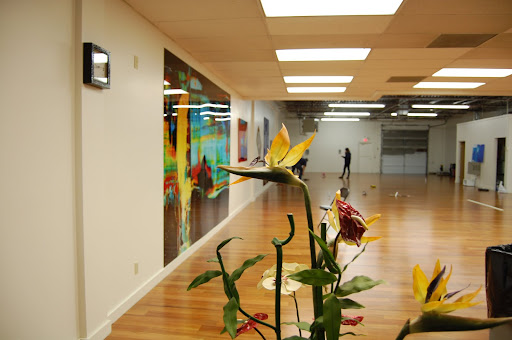
there is a dance studio in town. it looks a bit like this:
     { picture borrowed from one of the Ballroom Utah photo albums }

I've been to this place a bunch of times now for dancing lessons, and once for swing night. why did I not seriously learn to dance sooner? I could've been really good at it by now. as it is, I have learned the salsa from Corey (with whom I got to dance the most fabulous cha-cha ever), some fancy waltzing from Seth, and a bit of old-fashioned swing from a handful of random people who were at the studio last friday.

one of those random fellows was named Scott, and as he was leading me through a very basic Charleston, he said, "don't be afraid to follow yourself. you're doing pretty well already." I had stopped in mid-twirl, frozen and unsure of what I was supposed to be doing and where my feet and hands should be. obviously it messes both of you up when you do that. no one can even pretend that you're dancing any sort of dance if you aren't moving.

his advice in that moment still makes me smile. there was a compliment buried in it, of course. but that's not the reason I will always remember that dance and those words. is it bizarrely sentimental of me to twist them out of context and apply them here to life in general?

in my waltzing lesson last month, I learned that great dancing takes thorough physical confidence. despite the fact that I'm the girl, the follower, the one who gets spun and twirled and dipped, I need to give my partner, the leader, something to work with. I need to push back. I need to make sure every inch of me is exuding an I know how to waltz vibe. there needs to be a little friction. pressure. cooperation. flexibility. fearlessness becomes a foundation for all of these other things. if you don't move, nothing cool will happen.

I'm not going to belabor the metaphor here. life. dancing. yep. all I'm hoping is that all these dancing lessons will somehow infuse me with the courage to start following myself. even if I have to fake that thorough confidence, I'm pretty sure the proper footwork will get drilled into my head eventually.

Wednesday, July 6

suddenness

last week I threw all my possessions into boxes and moved precisely 4.2 miles around the corner. my zip code changed by one measly number.

I'm 3.2 miles closer to work now. there is a garage and a basketball hoop and a tree full of wind chimes. and we have a sunroom. but I'm going to convince everyone to call it the conservatory. is that okay? who doesn't want a house with a conservatory in it? we could stage our own live-action version of Clue now, couldn't we? dear littlest brother: let's.
a picture of our conservatory. there are my little jade plants again. just behind them is a pot of houseleeks. I hope I don't kill them. maybe I should replant them outside somewhere. maybe they don't deserve to be trapped in a terracotta pot.

I wouldn't call this new house just another terracotta pot for my life... but some people might. I've been replanted so many times now, it hardly matters anyway.

my zip code has changed by one measly number, right at the end. will that be good enough? will this slight rearrangement suffice to soothe my restlessness? or will I remain beset by rather crazy urges to run away to Baltimore? or England or China or Idaho or Canada or New York or wherever?

better questions might in fact be: will I still, despite this perfect opportunity to start over and redraw the map I'm supposedly following, be afraid to do all the things I really want to do? will there still, despite this chance to re-evaluate and resolve, be a million what ifs doing their best to hold me back?

4.2 miles is not very far. I don't think it's far enough to kill the what ifs.

Monday, March 28

back and forth, up and down

I am going to ace the GRE on thursday.

yes, that is the story I'm telling myself. I'll adjust the definition of 'ace' later on if I must. cross your fingers that I won't need to.

and once that gargantuan standardized test is overwith, I'll be facing a slew of other things to check off this disorganized list of mine. I've been waiting and waiting and waiting so long for so many of these things. and it's hard to tell which things I can do more than wait for and which things I can't. none of it's easy. every week there are things you've learned to count on and suddenly those things change. or they disappear. or get complicated. or stop making sense. or move out from under you. or just get forgotten.
swing

it's easy to get scared. anger and fear can drag themselves through you as if you were nothing. doubts can carve holes in you like you were made of soap. and what can you do? there are a million things you can't anticipate. a million things that won't be anything like what you expect (even if you were once exceedingly sure about them). and a million things that you just don't know. and maybe it's impossible for you to know them.

my dad told me this weekend that those million things should be exciting. they are a million things you get to find out. a million things you get to learn.
Swinging
I resolved back in January to be a little more excited about life. I guess I wanted to hold on to the sense of optimism I'd come across so unexpectedly last summer, and I figured that filling my head with things to be excited about (even the smallest of things: yoga class. the brilliant view from this quiet little library. learning the lyrics to an awesome new song.) would do something to keep it alive, even if just barely. has it worked? maybe.

the word optimism is related to the word optimum, which means the best possible. to see the best possible world in the world that you're living in... that's quite a skill. sometimes it takes a lot of patience to find bright, happy things in this dreary world. sometimes it takes effort to change your perspective and refocus on all the good things instead of the things that are missing or lost. it takes patience, and determination, and faith, before you can take the brutally unchangeable circumstances you're given and envision something wonderful and worthwhile happening in spite of them, or even because of them.
swing high
{ and this one is also from yet another kind soul on flickr. }
almost everything is temporary. so even if right now you can't see anything at all anywhere that could be called the best possible, you can imagine a moment in the future where everything is different, can't you? a future where you've found some answers and made some decisions and vanquished some demons. even if nothing else changes, you can change. you can keep looking up. you can say something. you can move. you can pray. you can write. you can give. you can turn around. you can run. you can adjust a few definitions, adjust a few expectations. you can wait. just don't ever give up on finding the best possible.

I know it's out there. I just hope I recognize it when it gets here.

Tuesday, March 22

syrupy cynicism

xkcd (you've heard of it, right?) has a tagline. Randall Munroe, the ex-NASA employee who writes the thing, announces it as A webcomic of romance, sarcasm, math, and language. and apart from the math in there, what's not to love?

xkcd also comes with a warning. at the bottom, just so everyone knows what they're getting into when they show up to read it, it says: this comic occasionally contains strong language (which may be unsuitable for children), unusual humor (which may be unsuitable for adults), and advanced mathematics (which may be unsuitable for liberal-arts majors). not counting all the programming geekiness and occasional vulgarity, xkcd is all smart and insightful and amusing, wrapped up in an adorable minimalism. (okay, the programming geekiness might be insightful and amusing too, but I wouldn't know half the time, would I?) it's art. it's social commentary. it's philosophy.

I've been thinking about this one recently. comic number 807, or, as it happens to be titled, Connected:


the title text is the thought-provoking part. Mr. Munroe continues: "Or love in general, for that matter. It just leads to the idea that either your love is pure, perfect, and eternal, and you are storybook-compatible in every way with no problems, or you're LYING when you say 'I love you'."

hmmm. is that the idea we're trying to sell ourselves? that there is no middle ground? that it has to be a piece of cake or nothing at all? I wonder why. maybe it's like Frank Chimero said. "It is okay to romanticize things a little bit every now and then: it gives you hope." you teach yourself idealism because you need hope so badly. you sometimes forget the 'little bit' and the 'every now and then' and you invest your whole future in unrealistic storybook bliss.

more comics from the Romance section of xkcd, with accompanying random thoughts:
aw, can't you just taste the bitter loneliness they're both shivering with there? it's so cute, right? I think it makes a funny contrast to this one:
such funny, fickle beings we can be. we harbor so much longing for the imaginary and unreal, always looking over that fence, analyzing the greenness of that non-existent grass.
even putting all romanticizing aside, you have to admit that finding and loving a person who loves you back is pretty amazing and miraculous. how does that happen? will we ever understand it? or are you doing well enough if you can simply be grateful for it, and create something equally miraculous with the love you've found, once you've found it?

this one could be sad. but... your heart will always give you a choice, won't it? as much as our internal organs manage to control our behavior most of the time, I don't believe you always have to listen to them. you can choose to trust your heart or you can choose to change your mind. you are the only one who can.

these what if questions are the kind you have to fight with sometimes. who knows where they come from and what they have to gain by planting doubts in your life? I think the trick is realizing that you get to decide. the universe trusts you to do the right thing. and even if you don't, it will all work out eventually. there is no template, no magic checklist, no fool-proof map to go by, and if you keep trying to make your experiences match up with what you see in movies or in books, you'll always be a little disappointed and confused. you have to trust yourself just as much or more than the universe does. go on. put down all those other people's stories and write your own.

Tuesday, September 14

stop trying to be clever

I know I'm not just meant to sit around looking up at the sky. there are a billion other things.

right now hardly ever feels like enough.

so I get restless.

and then I get a phone call. and someone has some crazy idea.

'come live in Salt Lake.'

'let's go to Hawaii!'

'road trip to Canada!'

'road trip to Los Angeles!'

'you could always go to grad school or something.'

or:

'you want to move to Idaho.'

and the restlessness in me decides. why the heck not?

some of these crazy ideas actually happen. I live here. I went to Hawaii. we had a fabulous weekend in Los Angeles.

some of them do not actually happen. other things happen instead. I have not been back to Canada. I have not aced the GRE. I have not moved to Idaho. (yet.)

but I am restless. waiting for something. somehow daring to anticipate...

who is going to call me next? whose crazy idea will it be that I might swallow completely whole?

a better question might be... why do I need other people for crazy ideas at all?

Tuesday, May 5

zebras. tigers.


there is the question of why the title of this little blog is fear, anger, and doubt. it is a rather depressing set of nouns.

at the very bottom of this page, my title gets expanded into fear for all the things i can't yet do, doubt for all the things i don't yet know, and anger enough to make something of it. these emotions overlap and blend into one another so much that I'm not sure my simplistic explanation there makes much sense. back in university these were feelings I grappled with all the time. something about learning things brings out this beautiful coat of stripes: complete inadequacy up against perilously infinite opportunities.

I've thought about changing the title. I don't really need to... but I am not in the same place I was back then. the stripes have faded.

pondering graduate school and watching friends writhe in the grasping fist of the end of their semesters has brought back vague memories. of course formal education is not the only place to learn stuff, nor to face the chasms of one's own ignorance. the fear, anger, and doubt can come from everywhere. I keep the title because they are emotions I need to accept and face and recognize. if they are my enemies, I want them close.

it is in facing and fighting these shadows that I find their opposites, after all. I cannot enjoy any peace or courage or faith if I do not also taste the fear and chaos. I need them all. fear for all the things I don't yet know and anger for all the things I can't yet do, and also doubt for all the things I can't yet do and fear to drive me out of myself to do them anyway. I can't get away from these things. I must learn to use them.