Showing posts with label ideas. Show all posts

Friday, May 22

summer in progress

if only I had known about Audio Flux when the semester began, it would've been great to challenge students to meet the circuit 7 criteria for part of our class. ah well.

my students did some great work anyway. here are a couple of their final projects: 

Social Upkeep 

Everything Breaks (episode 1 and episode 2

I hear that circuit 8 of Audio Flux is coming soon, at least, so maybe I can work it into something for English Composition (our first-year writing class) this fall. in my one 10.35am section I want to focus on listening and understanding and responding thoughtfully. I am not yet sure how, exactly, but hopefully the students will be open to it and cooperative with each other. part of me is skeptical about building real community within the deeply trenched constraints and stretched-out shallowness of classrooms. Dead Poets Societies are not and never have been real, right? but more of me is gonna try anyway. it is worth trying, no matter how slowly and incompletely each little classroom community seems to develop. 

my very intermittent course prep thoughts are mixed in among many, many other plans and ideas and projects and to-do lists. that is what summer is, usually-- a big mishmash of ambition and dreaming and doing stuff and lounging about.

I finished reading (and lazily annotating) John Durham Peters' The Marvelous Clouds: Toward a Philosophy of Elemental Media some several ages ago now. I keep meaning to send my marginalia-ed copy to friend Chris sometime. we'll see if I get around to it.

this week, I'm getting around to posting all the neat quotes and concepts from all the dogeared pages. they are a little grandiose and navel-gazey at times, but maybe that is okay given that all our navels are made out of the same dusty star crumbs anyway. 

as I compile and remix these quotes a little bit here, I'm thinking a lot about place. it's been 6 full years and a bit since we moved to Arizona. a new record for longest-time-in-one-area. and while I never really wanted to settle down much there is something nice about being known and being somewhat settled. 

still, we'll see how much longer we last in this scrubby desert land. I can only be in one place at once, physically. and there are so many places! media can bridge them somewhat (and times also, a little). but old postcards from California aren't the same as actual California. 

"We make meanings, but do not so in media of our own making; our bodies are embedded in climate history, fire regimes, the spin of the earth, north and south, and relations with plants, artifacts, and organisms of all kinds, especially each other. Whatever nonverbal communication might be, it is certainly richer than our bodies' hints and gestures, rich though they are" (p. 380)

"Real meaning is not fragile: it is exuberantly abundant, overwhelmingly so" (p. 379)

"Nature has meaning, but not for us" (p. 379)

"But the human condition is recursive; it is a conditional condition: our actions change the conditions they act in, especially since they change us; we speak and act, and as we do we change the conditions in which we speak and act" (p. 51) 

"Communication is deeper and older than language" (p. 133) 

(that bit reminded me of this little post by Ian Leslie, which I usually ask all of my students to read in any writing or communication class I'm teaching. the communicative force field around us all has an elemental nature, I suppose.) 

"The stars were both divine and cozy" (p. 386) 

"This is what the universe has yielded: another being in your same form, improbable and precious, with whom you may be able to contribute to the ongoing history of life. Love and beauty are the meaning of the universe, and such meaning is not a human fiat imposed on raw and unfeeling matter by the effort of our will, but rather the product of cosmic history" (p. 385) 

"Perhaps the past cannot be tapped in its full immediacy because the present is not fully immediate. There are vast patches of unobserved magnification, for different organs of sense, for minds quicker or slower than ours. Even for the most acute observer, descriptions might be incomplete, not only because of limited tools but because reality is lacking. Just as we often do not know what we mean when we speak, so the universe might not always be so sure of itself. The cosmos is structurally incomplete, as gap-ridden as its files. Such wonderful conditions these are! The universe generously accommodates our every new act, word, or thought. There is still plenty to do. It is open for new events; it is a container with a gracious void. A growing universe is a (retroactively) incomplete one." (p. 354)

"A phonograph record, tape, or compact disc does not really hold sound: sound exists only as pressure in time and space. Acoustic storage media hold recipes that, with the right equipment, can produce more or less the same sounds over and over, but they don't hold sounds the way a cave wall or canvas can hold an image. Everything that happens in time has to be started over and over in real time. The sound does not last, the word flies away, the vibration dissipates. The vinyl record can endure, but the music it plays on a stereo does not." (p. 311)

"All complex societies have media inasmuch as they use materials to manage time, space, and power. Kittler's point, that culture was always already a procedure of data processing, follows confidently in Innis's path. Kittler's word was Kultur, a term that can mean both "culture" and "civilization"-- and, never shy about grand claims, he certainly meant to include both." (p. 20) 

"For [Norbert Elias], the civilizing process involved three fronts in need of taming: pressures inside people, pressures between people, and pressures between people and nonpeople" (p.159)

"There is an old clash between the ethic of detachment, which calms the soul so well, and the ethic of commitment, which calls us to upsetting action." (p. 384) 

"Death can feel completely normal, dull, and expected, as blank as boredom, and also unbearably bitter and impossible, as hard as thoughts of falling. Death is a great revealer of infrastructures, and, like them, it partakes of the habit of coming out of hiding traumatically." (p. 383) 

"... but this blessed earth will live on, and the clouds and sun will continue to radiate for a season, and the beauty that pulses in our senses will continue to pulse to other senses or just to itself, and that will be enough. Knowing that this beauty will persist gives some comfort. When we go, natality might well bring something new forth. There might be long periods of anoxic oceans and arid wastelands, but something will happen and eventually wildflowers might sprout in the ash we left behind." (p. 387)


I will blog more this summer. so much has happened already and classes haven't even been over for a full month yet.

Monday, February 2

books books and more books

at the end of last summer, the family gathered on the edge of Idaho and Utah to see my paternal grandmother off on her journey from this world into wherever we find ourselves after. 

from among grandma's things, I was bequeathed an old 70s-style woven and leather bag (I have vague memories of grandma toting her students' papers and homework sheets and such around in it, once). most weeks now, at my house, it is a perfect home to my choir music and a bit of spare lip balm. 

but before I brought it home, more or less just as my dad handed it to me, I found a highlighter pen and a few scraps of notepaper in the bag's many pockets. one little note was a list of medications. the other was a list, in soft, properly-formed cursive pencil, of authors and a few titles:  

G.G Vandagriff
Lynn Austin
Thomas Perry
Linda Nichols - Not a Sparrow Falls 
Chris Stewart - The God of War 
Ted Bell - Nick of Time 
James Kunstler - World Made By Hand, The Long Emergency
Angie Sage
Jessica Richard Draper
Beverly Lewis

and then, in pen at the end, written slightly larger, 

Diana Crawford

when I got home and had a minute, I looked them all up in my local library catalog. of the available options they had for me to put on hold, only one author seemed interesting enough-- James Howard Kunstler. I've read three of his books from the World Made By Hand series now.

they're pretty neat. not all that earth-shattering, as far as post-apocalypses go, but well enough written and engaging. against the premise of oil-shortages and societal collapse, we have a tapestry of colorful characters surviving together. every horse that is mentioned gets described specifically by breed. every antique piece of furniture is given all the fancy labels an auction catalog could ever ask for.  

did grandma ever read these too? I'm not sure.  

I do know we both liked making things by hand from time to time. 

maybe I'll get my hands on some others from her list, eventually.  

more recently, I've been poking around at the short list for this year's Tournament of Books. I got my hands on Bunny so that We Love You, Bunny would have more context. not sure I liked the first-- its ending was pretty interesting though-- and we'll see how much patience I can muster up for the self-absorbed and anxiety-ridden MFA student collective that seems to be narrating the next one. at this rate I won't have time to read anything else at all in advance of the tournament, but so it goes. 

at dear friend Angela's house last month I perused her library for just a few moments and was tempted by a pair of slightly chubby fantasy novels by Naomi Novik: Uprooted and Spinning Silver. they were just the thing to offset the stress and chaos of a new spring semester. good, deep historical fantasy with rich cultural flavor and complexity of character-- I loved them both so much. the second especially so. it would look gorgeous in a video adaptation, I bet.

so of course now I am in a serious obsession with Naomi Novik novels. the other day I finished, too soon, the audiobook of A Deadly Education-- the first in the author's Scholomance trilogy. I loved it so much I think I'm having withdrawals from the world and the voices and the magic of it. it was all so vivid and gritty and perfect. please let the second and third audiobook copies arrive quickly via Libby, please. 

on paper, the series didn't sound that interesting. it is more than easy enough to think we've had enough wizard highschool stories, yeah? 

I'm glad I borrowed it anyway. it is a darker take on the international wizard school trope, but not at all trite or twee or annoying. I found it thoroughly enchanting, with superb world building and expertly balanced first-person narration. we inhabit for 13 well-paced chapters a snippy, mixed-race protagonist named Galadriel (El for short) who somehow, despite being perfectly stubborn and rude to all her classmates, is eloquently self-aware enough with her narrational monologues to come across as relatable and even likeable. I kept thinking of this as Kuang's Babel meets Harry Potter meets Wheel of Time. maybe. not the most apt comparison, I'm sure. ah well. 

books are awesome.

what have you been reading lately? 

Friday, February 28

another spring semester

so far, this corner of the world has felt abnormally like spring for the past eight weeks, save for two days of snow-dust several weeks ago. everyone is dreading how dry and fire-prone the whole area is going to be through the summer. let us hope we have a few good monsoons in store at some point. please?

eight weeks since classes started means that half the semester is over by now. but I can still blog about a new semester even when it's halfway over, right? why not?

there isn't much to say. this semester is basically a repeat of two years' ago's with only minor updates. one section of Technical Report Writing (this time with extra usability and UX flavoring), one section of The Art and History of Podcasts (quite a bit improved since my first semester teaching it), and plenty of other academic work on top of the usual teaching: meetings galore, emails that should not be so draining to read and write and manage, various professional development adventures, research and writing of my own in small snippets.

I enjoy this teaching career, such as it has become for me, because it involves so much learning. or at least I always used to think so and say so. am I still learning anything? am I still enchanted by the process of stretching my brain in new directions, of finding little corners of wonder amongst all the mundanity of things, like it seems I always used to be? well yes. mostly yes. students and colleagues say things all the time that make me think new thoughts and appreciate new things. their questions and my questions often join forces in pretty excellent ways. it's fun.

novelty seems rarer, these days, though. there is a lot of sameness, and it feels far too easy to let the sameness subsume everything else. do older brains prefer more sameness, I wonder? or does accumulation of experience just mean that any novelty we find is easier to handwave away as not-really-that-interesting-after-all-actually-kind-of-just-like-that-other-thing-I-already-know-about? or maybe our comprehensive eyesight starts to fade somehow, rendering us less able to appreciate shining novelty even when it's just as plentiful as ever?

I'm not sure. 

what is new and notable for me lately?

with enough time and energy, and given a wide ranging definition of "notable," I could list so many things. an onslaught of information from news and social media and instant messages. knee-jerk reactions and opinions and maybes in response to all of it. the absurd loveliness of a few calm, rich summery days in February. bundles of anticipation accompanying sprouts and buds and new greenery underneath dried leaves. earlier sunrises and later sunsets. a recent trip for work to Albuquerque, including a not-for-work visit to this cute new fiber arts shop. (I bought 300g of a wool/viscose blend called "crumpet tweed." awesome name, eh?)

also, 'tis the season for (a perhaps ridiculous amount of) excitement about the tournament of books. it starts next week!

I've read only four of this year's contestants (which is four more than I usually manage to read before the opening rounds): 

The Book of Love, by Kelly Link

James, by Percival Everett

The Wedding People, by Alison Espach

and Beautyland, by Marie-Helene Bertino

I read them in that order, because that is the order in which the library served them to me--three in nice new hardcovers and one (The Wedding People) as a short and sweet audiobook. now that I've finished Beautyland, I really need to relisten to the So Many Damn Books episode about it

do I have a favourite? do I hope one of these four wins? it's hard to say. James and Beautyland have the most depth, I think; I read them both quickly and could see myself reading them again someday. the other two were excellently enchanting to me though, and both The Wedding People and The Book of Love delighted me with their neat and just-twisty-enough plots. 

but I don't like to make predictions. if I fill out a tournament bracket in the next six days it will be as random as anything might be, and I will not be attached at all to the idea of my random picks matching up with the true official judgements.

let's just see what happens next.

Saturday, June 29

favorite conference

last week, my time was taken up by another academic conference.

I presented on semi-academic podcasts and how awesomely they seem to cultivate discussions about scholarly things for the consumption (and perhaps participation) of non-scholarly audiences. such a thing seems pretty rare, but maybe it's less rare than I'm making it out to be. after all, 

“Podcasting’s bridging of knowledge barriers in an intimate manner is one of its key, and most readily apparent, properties. Thanks to the medium’s wide accessibility— given its general affordability and portability— knowledge in diverse domains can be shared by individuals and groups around the world. Thanks, as well, to their intimate, personal and often-conversational natures, podcast episodes can help individuals of different educational levels cross disciplinary boundaries easily. Audience members need not be enrolled in an educational system in order reap their benefits” (Swiatek, 2018, p. 177-178).​

how's that for a minimalist literature review, eh? Swiatek's chapter is in the collection I used as a textbook for my introductory podcast course last year. good stuff.

bridging knowledge barriers can happen across all kinds of lines, not just those of formal higher education, of course. academia is only one of many domains of learning. 

but for my presentation, I concocted a fairly narrow set of criteria for the four examples I showcased. to fit in properly with what I wanted to talk about, the podcast needed to be...

- officially made by/with credentialed, institutionally-affiliated academics ​
- making use of the ethos and/or expertise of their degrees at least a little
- purposefully talking to and/or translating for non-academic audiences ​to some extent

I also limited my examples to humanities/communication-y topics, because that's my discipline, and a 15-minute conference talk cannot be much more comprehensive than that anyway. I am curious to look at other podcasts in this vein though. eventually. Huberman Labs would count. and probably plenty of others I haven't heard of yet.

my observation, as a fairly high level podcast fangirl, has been that most scholarly podcasts don't bother talking beyond their own discipline, much less beyond the academy in general. in a sense, that might be what "scholarly" means-- by, for, and of scholars. but I also knew of a few counter-examples. a few podcasts that managed to feel more openly, accessibly, publicly academic.

for this little starting-place of a conference talk, I looked at these four: Material Girls; Lingthusiasm; Think Fast, Talk Smart; and Professors Play

according to my proposal for the event, I wanted "to highlight these as particularly valuable examples of public scholars demonstrating from the ivory tower how playfulness, connection, and personality are key ingredients for learning, teaching, and thriving as 21st-century humans."

want to see my little digital handout with transcribed bits from each show? there's a link to my slides from there too, which in turn have a few painstakingly chosen, hopefully entertaining-ish, audio clips. 

it is perhaps silly to turn my little presentation from last week into a blog post here, but (now that I'm halfway through doing it anyway) it does seem to match the spirit of my whole point— academia doesn't need to keep all of its cool conversations to itself.

on top of making that point, my other goal with the talk was to have fun introducing whoever showed up at my 11:00am panel to a few very engaging podcasts. I called it "Public Scholarship as Playful Pedagogy," but the title easily could've been shuffled into “Playful Scholarship as Public Pedagogy”— I'm still not sure which sounds better. the lines between all these things are fairly slippery at the best of times.

the lofty version of my whole argument is something like this: podcasts are conversations, usually quite public ones that can shape the cultures and communities of the world we live in. sometimes they even create new communities, which in turn have their own world-shaping power. so it matters who gets to be part of the conversation. it matters how the conversations are designed. 


Computers & Writing is one of the best conferences. next year it'll be in Athens, Georgia. will I get to be there and keep talking about podcasts as scholarship or pedagogy or public pedagogical artifacts or anything like that? we shall see.

Tuesday, March 26

Kingsolver and current events

almost six months ago, my attention was drawn to all the conflict in Palestine more than it ever had been before. a house down the road from us began flying an Israeli flag all of a sudden. half of all the social media posts are still imploring everyone to speak up, to choose a side or else by default choose complicit cowardice. the news of October 7 and all the terrible news since has been rightly hard to ignore.

since December, my old land acknowledgements post from the summer of 2020 has been oddly popular. the basic stats in blogger tell me it's gotten more than 100 views within the last 30 days. by comparison, a typical post here in this random collection of internet musings gets fewer than 20 views and that's it. but this old post has consistently seen around 30 hits per week for several weeks now-- I'm still not sure why. is it because phrases like "colonial ruin" "violent displacement" and "racist horribleness" are highly topical these past months? I've let my proper Google analytics account languish without updates for too long, so I don't really have a way to find out.

also about six months ago, I was reading Barbara Kingsolver's Prodigal Summer. a lush and lovely novel--a braid of stories all about our relationships with land, trees, animals, nature, and each other. biology. ecosystems. extinction or conservation, and all our efforts inbetween.

there is plenty I've so far remembered about this novel, but the thing I've most wanted to blog about here is a pair of sentences in the middle of it. they are sentences about Jewishness and prejudice and history.

Lusa, one of the three point-of-view protagonist characters in this story, is half Polish, half Arab. she marries blissfully into a struggling-but-resourceful family of appalachian tabacco farmers, too soon loses her husband, inherits his parents' old farm house, and faces various tensions and pressures from her local, white, rural in-laws as a result. 

I keep thinking about this line of dialogue from one of Lusa's chapters. she's talking earnestly with the one in-law, a nephew, she feels closest to. 

"That's what I was thinking, too. Families lose their land for a million reasons. My dad's parents had this wonderful farm in Poland, which they lost for being Jewish. And my mother's people got run off their land for not being Jewish. Go figure."

this pair of contradictions struck me, as I read it for the first time in fall of 2023, so much more definitively and potently than it might have at any other time.

and when did Kingsolver write this? my idle curiosity is easily answered: Prodigal Summer was published almost a quarter-century ago. in October, 2000. 

from devouring her other early novels (Pigs in Heaven, Flight Behavior, Unsheltered), I know Kingsolver has a deft way (sometimes subtle, sometimes less so) of commenting on potentially controversial political realities-- like this seemingly endless conflict in the middle east, or like the relative failings of public education, or like the impact of settler colonialism on indigeneous families, or like the nonsensical state of US healthcare systems. 

in October of 2000, I was an almost-17-year-old. what on earth did the words "Israel" or "Palestine" mean to me then? the first I only knew from a bunch of biblical prophecies and hymns, the second from Laurie R. King's A Letter of Mary (1997) and O, Jerusalem (1999), if indeed I'd really heard of Palestine at all. in neither context did I think very critically about what these stories meant. honestly, I was probably quite detached from both versions of the place. their respective peoples. they all may as well have been equally, ineffably, untouchably fictional.

halfway between then and now, I must have seen this rather haunting animation make the rounds on the internet. you've probably seen it, too.

unsurprisingly, there are dozens of new comments on that page since the events of last October.

looking into the piece again this past week, I realized that a full-length film version was produced and likewise donated to the public domain in 2018. do I have the time and spiritual energy to watch it? hopefully someday. (I've also now realized that the artist, as generous as she has been with her artwork, seems to have some not so cool opinions about the social construct of gender, so there is that to grapple with too.) 

{ the Palestinian flag, as if made of butterflies, borrowed from this kind soul on deviantart }
 

being Jewish. 

not being Jewish. 

we might say Lusa's ficitonal comments here are oversimplifying things.

and yes, I'm usually the first to say (to myself if nowhere else) there must be more to it there's so much we don't know how can anyone have a truly worthwhile opinion what's the use in trying to fully understand it anyway it's so complicated and what can I do about it or about anything, little me with my little blog and my little comfortable life?

what's truly oversimplified is any inkling of a thought that this single roundabout post regarding my country's rather terrible, rather unconscionable involvement in the horrors of this geopolitical situation is anything like enough to counter my general day-to-day silence on the topic. 

no matter how many times I might ponder bringing it up to my students or asking all the ROTC cadets how they feel about Aaron Bushnell or posting something to instagram with a hashtag like #CeasefireNow or #GazaWillBeFree... thinking about a few lines from an old Barbara Kingsolver novel and mentally wringing my hands about all the knotted historical roots of this conflict aren't enough at all. 

I don't know what could be enough. write to congress? to the president? just once? or every month? every weekend? with a few pleading letters or phone calls to these more-powerful-than-me people, can I then say I've done my part? 

I don't know. it doesn't seem like it. no number of letters or public protests, and certainly no ocean of hashtags, no matter how many, seems like enough.

so for now, current events continue to sweep across the world, sort of but not really dragging me with them. even so, we are all connected. we are all somehow jointly creating this world. the fact that I'll never be able to single-handedly fix anything on the other side of the planet doesn't mean I can safely give up, right? even if I don't-- or can't-- truly know if my impact on the sprawling web of the universe is leading to more preservation and less extinction of light and goodness, I have to keep trying. 

is it up to me to decide which side of the scale my feet are on? to judge my own quotas of light vs. dark?

for now, it is. I'm the only one who can. am I doing my best?  

Wednesday, December 20

the tournament of TTRPG books, final round

the final round:
Dungeons & Dragons (5e) vs The One Ring (2e)
 

in the beginning, along with a lot of scribbly scattered notes and spreadsheets of metadata on each RPG book, I mapped out my relative prior experience with each of the 16 systems, like so:  

None-- The One Ring (2e), Cyberpunk RED, and A Song of Ice and Fire
    
Barely any-- Wrath & Glory, Scion: Hero, and Exalted 

Some-- Pathfinder (2e), Shadowrun (5e), Mage: the Awakening, and Changeling: the Lost

More than some-- World of Darkness, Star Wars: Force and Destiny, and 7th Sea (2e)

Lots-- Vampire: the Masquerade (5e) and Dungeons & Dragons (5e) 

there were some idle thoughts about coming up with a color code to go along with this, even. maybe it would've started with grey, then blue, yellow, green, up to a nice purple for the ones I've played most, or something like that? not important, I suppose. arbitrary distinctions to signify those slightly less arbitrary.

in any case, The One Ring has already vanquished one of my most-played RPGs. does it have what it takes to beat the other? 

either way, it will feel like Tolkien wins.

we recently finished listening to The Fellowship of the Ring narrated by Andy Serkis. so excellently done-- all the voices and the singing. I loved it. at least 20 years have gone by since I last read the book myself. I still mean to reread them all at some point, but who knows when. there is such a richness in that story. it is beautiful, touching, deep, and timeless. I'm not saying anything here that hasn't been said a hundred times.

last week, we gathered friends at our table to begin another D&D campaign. I'm still working on putting the finishing touches on my first-ever bard: Ennagold Lindenrill, a wood-elf from Waterdeep. the rest of the party shall include a couple of wizards, a couple of clerics, and a paladin. it's exciting to be gearing up to play once again after about a year and a half spent in other game systems.

judging these two against each other is as expectedly challenging as most of the last few matches have been. which do I value more? the focus, simplicity, and artistry of the newer book, or the flexibility, openness, and mainstream appeal of the older? which deserves this more? the world-changing system that paved the way for pretty much all the others, or the beautiful latecomer based on a world-changing fantasy that paved the way for it in the first place?


SYSTEM Dungeons & Dragons (5e) The One Ring (2e)
cover tagline = "Arm yourself for adventure."
"Enter the world of Middle-earth..."
publisher =
Wizards of the Coast
Free League Publishing
pub. date =
2014 2020
original cost =
$49.95 $49.85
length =
11 chapters / 320 pages
10 chapters / 240 pages
my exp. level =
very much lots
none prior


the easy part is judging these two on aesthetics. The One Ring will probably never lose on that count. I bet the designers of this book put as much attention and effort into its appearance as Tolkien himself put into the elvish language. it seems to me almost as perfect as any functional book could ever be (semi-garish cover notwithstanding). beyond the surface of the pages, too, the aesthetics of this epic storyworld come with all the depth and richness of their source material. it's lovely.

and while The One Ring is soaked in the vibes of deep green-grey forests and cozy, semi-lit hobbit holes, D&D injects all that with a little more brightness. the saturation is turned up, the gleam of adventure a little more polished against a grab-bag stage-set of fantasy. they aren't opposites, but we might say they are different shades of the same hue: The One Ring a deep piney dark-olive, like those magical woven elf-cloaks in shadow; D&D more like new grass, or spring-time oak leaves in the sun, or a green leather satchel freshly polished. you can tell serious, weighty stories in either game, but D&D will always feel lighter to me.

judging on mechanics, I have a harder time choosing which I like more. The One Ring is simple and unique. it's character creation options are very focused, its gameplay processes similarly so. destiny and heritage and lore combine to draw strong lines around the possible story arcs. player characters rotate through adventuring phases and fellowship phases. journeying, counseling, and resting are given just as much attention (if not more) than combat.

D&D divides its gameplay slightly differently into exploration, social interaction, and combat. it's close enough to the same ingredients, but used in a significantly new recipe. and much like an easy, endlessly-adapatible recipe (like this one-- so easy and so fun to mix and match with), D&D feels infinitely flexible. dial down the combat and add more exploration or skill challenges or socializing if you're feeling like it-- it'll still taste awesome. it will still be exciting. 

in terms of approachability, do these games come out equal? as I've said before, D&D has the advantage of being very well known, with an established fan base and a widespread community to help ease new players into it. practically, playing D&D can be as basic or as convoluted as you choose.

without the same relatively longstanding advantages, The One Ring does just fine. I like its organization and approach a bit better, and that beautiful simplicity earns it plenty of points here.

if we wanted to get quantitative about it, we could tally things on a rough scale like so, dividing a pool of 10 points per category between the two systems...

SYSTEM Dungeons
& Dragons
(5e)
The One
Ring
(2e)
points for aesthetics = 2
8
points for mechanics = 6
4
points for approachability = 6
4
total =
14
16


a close match if there ever was one, eh? and honestly, I keep wanting to fudge the points further. (full transparency: I have fudged them up and down and back already a few times. this is my tournament, so it's allowed, right?) I mean, are the aesthetics of D&D so very lackluster in my eye? and maybe shouldn't the mechanics be weighted more heavily, given that's what the game is essentially built out of? 

but beyond my trusty old three-pronged rubric... I wrote last time that I value vividness, simplicity, and consistency in these forms of interactive art. I seem to have the most imaginative fun with a clear framework in which to invent freely, wildly, with all the power of the game's limitations to help me build something cool. 

so which of these truly offers me more of that feeling?  

in another prior match-up, I also wrote that compared to D&D, The One Ring's character creation process seemed so limited, so relatively constrained. this remains pretty much my only grasped-at disappointment with The One Ring, I think. a barely-there complaint. and yet I concede that there is a nice structure to it and to everything else in the game, though. it's fitting, given the game's setting and all that. it's a great framework for narrative gameplay, narrow and vivid in its scope.

on the other hand, D&D has a bigger, wider frame. just as sturdy and serviceable, if far less technically beautiful. 

I think what really makes the most sense, to me today, is to add a fourth category and do a little bit more math. so here we go-- along with aesthetics and mechanics and user-friendliness, I'm going to look quantitatively at flexibility

and there, using this arbitrary system I've suddenly applied across this match, I'd give D&D a whole 7 and The One Ring the remaining 3. it's still awfully close, but D&D ekes out the higher score. 21 to 19. 


imagine approximately three seconds of a low and subtle drumroll for us, please?


the 2023 champion of the Tournament of RPG books: Dungeons & Dragons (5e)


Monday, November 13

long ago and far, far away

quarterfinals match 2:
7th Sea
2e vs Star Wars: Force and Destiny

if these two were movies or television shows, I would for sure pick 7th Sea. why? because oceans, rapier duels, and period costumes are just miles more to my taste than blasters, laser swords, and hyperspace. 

but these are not movies. they’re games: two fascinating RPGs that have beaten out their prior competitors by relatively slim margins. allow me to once again honorably mention Changeling and Cyberpunk RED as I marvel at the chances that have paired two strikingly different alternate/imaginary/far-far-away histories up against each other here. 

when I wrote about these two in the opening round, I noted that both have a pretty straightforward aesthetic of heroism and villainy, light side and dark side, goodness triumphing through even the thickest tangles of temptation. those aren't the only kinds of stories you'd be limited to telling in each system, but the game design lends itself to happy endings, mostly. both worlds ask for brave and impetuous, good-at-heart characters. both types of stories might be highly action oriented, or highly political, or most likely some of both. 

it's easier than anything to see a poetic resonance between the vibe of sailing ships into pirate-infested waters and that of piloting spacecraft through dangerous asteroid fields. and we absolutely must admit that the dashing, caped Lando Calrissian would fit gorgeously in either setting-- just swap those blasters for a pair of revolvers and we'd be set. 

since my earlier review of Star Wars: Force and Destiny we've acquired a brand new copy of Star Wars: Age of Rebellion and are waiting on Edge of the Empire to show up in the mail. then we'll have the whole trilogy of game books, ready for our in-person gaming group to use in the new year for a new collaborative story. so that’s something awesome to look forward to. I think I'll create and play as a human rebel this time... a refugee of Alderaan running headfirst into the difficult question of how far we should go in the fight against the empire...

in plain old down-to-earth reality, Star Wars is actually also a movie (okay, many movies, and shows, and, and, yes, yes, etc.)— but that and its relatively unique and pervasive cultural footprints are not why it's more likely to win this match. I wouldn't call myself a Star Wars fangirl by any means, though I do enjoy plenty of Star Wars media and find much of it quite touching in its way. recently, one of my new favorite podcasts released a really interesting in-depth materialist critique of the whole Star Wars franchise and (to a lesser extent) its fandoms. it's a great episode-- check it out if you have an hour to spare, or at least skim the transcript if you are at all curious and tolerant of such scholarly exuberance. the "behind the episode" bonus content is pretty neat too. there is a Star-Wars-y chart for us at the bottom, even. 

(materialist cultural critique is the coolest. and okay fine, I'll admit to being a hopeless Hannah McGregor fangirl if nothing else.)


SYSTEM     7th Sea 2e    
Star Wars: Force and Destiny           
back cover tagline = "The roleplaying game of swashbuckling and intrigue." "A long time ago in a galaxy far, far away..."
publisher =
John Wick Presents / Chaosium Inc. Fantasy Flight Games
pub. date =
2016
2015
original cost =
$59.99 $59.95
length =
9 chapters / 304 pages 13 chapters / 444 pages
my exp. level =
some 
a bit more than some


Star Wars as an RPG has been a formative sort of game for me— it was one of the first really long and epic stories I got to be a part of with other really dedicated engaged roleplayers (big shoutouts here go to Kay and Shaun and Rhett; y'all were great players for Vampire and Star Wars and bits and pieces of other stuff too). playing as Yahla, being part of her whole story arc and seeing how she faced a dozen dark challenges that I can barely imagine facing in real life, was so cool. it was a chance to play and experience and really lean into what roleplaying games are all about. so it has to win.

7th Sea does deserve plenty of honorable mentions, so let that be known (shout outs to friend Chris and Alyssa for their parts in that campaign, too). Zetallia could've perhaps been something like what Yahla was, if she'd had more time to unfold. hmm... maybe an epilogue to this tournament could be a showdown among all the most formative player characters I've been a part of. that could be interesting.

but for now, may The Force be with us all. the penultimate quarterfinal match is going to be really, really difficult.

next match-up review: World of Darkness vs Vampire: the Masquerade 5e

Friday, October 20

here there be dragons

opening match #8: Shadowrun 5e vs A Song of Ice and Fire 

this final opening round match-up review one has taken me a bunch of extra time for many reasons, firstly being that our mini-campaign of A Song of Ice and Fire spanned 5 whole weeks, plus a delay or two and a good session zero. thank you very much to friend Caroline for joining in on that game-- it was a most intriguing whirlwind of an adventure!

secondly and thirdly: I had been rather intimidated and hesitant about grappling with the notoriously labyrinthine Shadowrun book again. and I am a tad busier now than I was in August.

I last played Shadowrun many years ago now-- 2018ish I suppose? we and some friends ran through a short 3-session arc once in Indiana and once again in Louisiana; both were quite fun. and since 2019 I've been a fan of a narrative podcast performance version of Shadowrun called Fun City. it's good stuff. Mike Rugnetta is awesome, as are his roleplaying friends, and their voices plus marvelous sound design all come together to make the system look impressively manageable, somehow. (sidenote: I also found their Float City story arc, a pandemic side project using the indie RPG system Stillfleet, extra extra cool. someday I may need to check out Stillfleet properly. I notice it calls itself "grimdark," too. interesting.)

anyway, along with all that in-person and vicarious storytelling fun, I remembered Shadowrun being supremely complicated and overwhelming. it took me a while to work up the energy to face it again with a (hopefully, sort of, somewhat) more open mind.

the A Song of Ice and Fire RPG, conversely, was totally new. I've watched the HBO show (much thanks to all the friends who ever shared their HBO subscriptions and/or couches and homes to facilitate that endeavor), read three of the Game of Thrones books, and this past summer we watched House of the Dragon, too. there is much about Mr. Martin's world that is utterly vivid and iconic. I'd say it deserves its fame. Jeremiah and I were excited to have this tournament as an excuse to actually try out the RPG system based on it all.

once more I've kept the same outline of sorts for this review: a tidy table of metadata, summaries of the few characters I've made in each system, and then thoughts on their aesthetics, mechanics, approachability, and preliminary(ish) judgements.

SYSTEM           
Shadowrun (5e) A Song of Ice and Fire 
tagline = "Everything Has a Price" 
"Adventure, war, and intrigue in George R.R. Martin's World of Westeros"
publisher =
Catlyst Game Labs
Green Ronin Publishing
pub. date =
2019 2014
cost =
$59.99 $49.95
length =
11 major sections
/ 496 pages
13 chapters
/ 320 pages
my exp. level =           
some

none prior


previous characters

sadly, I have very thin memories of my two prior Shadowrun characters. both appeared in different renditions of "Mr. Sandman vs. the Dragon," Jeremiah's tried and true 3-session adventure. and I know both were riggers, created as such on recommendation from my husband GM, for the sake of that character type's relative simplicity.

one was named Kitza and I think her character sheet is kicking around somewhere in a box... likely buried beyond any easy reference. the other was a dwarf, I think? maybe named Pablo... or something like that? I remember something about some family of his being trafficked by a megacorporation and somehow, for better or for worse, were able to crawl free from a shipping container on some crowded docks at the end of the story. maybe. 

all in all, not much to reminisce about here. onward to the fun new stuff!

new characters

when I (finally) got around to re-reading Shadowrun and wading through its differently-unique character creation system, I came up with a mystic adept half-inuit half-Japanese elf chick named Ingyaka. she's sort of secret agent-y in my imagination-- like a stealthy, nature-loving, spirit-whipsering Jason Bourne or something. since we didn't plan a Shadowrun one-shot for this tournament, I have no idea how she'd show up in actual gameplay, and indeed I confess that I called her finished enough once I'd chosen her many magic spells. the tedium of figuring out what gear and eqiupment to purchase with even just six thousand nuyen (6000¥)--the lowest amount you can possibly start with-- didn't seem necessary just to write about it for this review.

-

character creation in A Song of Ice and Fire is much less an individual affair than it is in most other RPG systems where one expects to play as a member of an adventuring party. in this particular game, players first collaborate in creating a noble house-- perhaps one as great and powerful as the Starks or the Baratheons, or perhaps one of lesser renown, one bowing at the feet of some grander pillar of Westerosi history. ours was built along these lines-- a smaller house under the protection of and bound by honor to the great and wealthy Lannisters.

we called ourselves House Portayne, a wealthy house ruling an island of silver mines just off the west coast of the Reach, south of the Iron Islands. Caroline primarily played Lady Alasta Portayne, and I primarily played her second-born child, Tobytha. we had some input on the Lord (the chaste and humble Elrin Portayne) and other children (an older brother, Ethon, and a younger girl, Joryssa), as well as some side characters associated with the family. together we came up with a name and some basic info for our family's maester, Maester Bridon (hailing from house Wylde). later on, for my second official character, I created Gwenna Fallside, a rough castle guard who quickly earns the family's trust and becomes castellan of Silverfont Castle. for a few highly intense B-plot scenes inbetween the primary roleplaying action, Caroline and I played as Gwenna and the Maester. one of us may have gotten forcibly tossed out of a tower window to their death. very Game-of-Thones-y, isn't it? the B-plots were all very neat, adding to the deep and expansive feel of the game. 

our mini-campaign was set to span the reigns of Aegon the Conqueror and Maegor the Cruel, and we knew ahead of time that House Portayne would not survive. it turned out that we were all utterly doomed to be poisoned by jealous Lannisters and chased down by pirates trying to escape the inevitable seige of our island. little Joryssa did grow up and get married off to a son of House Reed, so maybe she and her line will survive to remember her origins. exploring the long-ago past of the Song of Ice and Fire universe like this was incredibly cool, even if all evidence of our House was hopelessly erased in the end.

aesthetics

these two games both come with quite intricate worlds-- one explicitly grown from the richly detailed, sprawling civilizations in Martin's novels and the other from the remix of almost everything else a person could want to tell a story about. both are alternate versions of something like western civilization, in a way. in A Song of Ice and Fire, we have an alternate history of European geopolitical conflicts, with zombies and magic and dragons and extra murder on top. in Shadowrun, it's an alternate near-future, with ruthless megacorporations and magic and dragons and cyberpunks all the way down. 

A Song of Ice and Fire, as an RPG system, seems to me like a vast, ornate, and orderly library of fairly traditional fantasy ideas-- spacious yet organized, and more or less tidy. it may have dozens of secret passages and a skeleton or two hidden in the corners, but generally it's presentable and logical, even if there's a lot going on. its illustrations have a soft realism, not lacking in the violence you'd expect from this particular setting, but lit by torches and candles so it all seems not quite mundane, but not quite so shocking or garish either. the book's design feels monestarial, with a tinge of rennaissance, maybe a little bit fancy-Shakespearean on the edges. there is a lot of all-caps, angular and serifed, strong and delicate at the same time, perfectly high contrast and comfortable to skim through.

conversely, the Shadowrun system feels like a massive kitchen sink full of influences. some of the art reminds me of Paul Kidby's style, which does seem fitting somehow (he's the artist who illustrated plenty of Terry Pratchett's work). other pages and spreads are more evocative of comic book and/or videogame art. like I said-- it is a mishmash. in a good way.

if this system were a physical room it would be a somewhat grimy, mostly abandoned, very magical attic full of random knickknacks, old photo albums, broken electronics, weird porcelain figurines, and wildly colorful posters, all collected over many decades and now surrounded by a tangled sea of wires and cables and spikes and jewelry. it's got all the neon-and-fishnets and glossy high-tech punk style of Cyberpunk mixed in with an animistic spookiness. we could say Pathfinder and Mage and Werewolf got put in a compost heap with all the other urban, cyberpunk techno-fantasies you've ever heard of, and Shadowrun is what crawled out, dripping with lightning and breathing fire. here, orcs and elves and magic and machines coexist with normality just like anything else that ever might have evolved on the planet Earth.

funnily enough, dragons and dragon imagery show up far more prevalently in the Shadowrun book-- little tattoo-ish line-art dragon symbols glow red in the bottom corners of every page, next to blocky page numbers and footer text-- than in A Song of Ice and Fire. Shadowrun gives us 8 lines of index entries under "dragon(s)," whereas "dragon" doesn't even show up as a unique entry in A Song of Ice and Fire's (much shorter) index; over there we only see Dragonbone, Dragonglass, and Dragonstone. that's interesting, eh? what if we wanted to play Targaryens?

mechanics

summing up the game mechanics and rules for these two isn't going to be easy. but I'll do my best. at least they have one wonderfully simple thing in common: rolling a bunch of d6s all at once based on your rating(s) in whatever skill.

for character creation, Shadowrun gives you 5x5 grid of options, across which to prioritize various character elements: metatype, attribute points, skill points, magic abilities, and extra funds for gear/equipment. for each column, you can only choose from the options included at one of the 5 priority levels. 

the Shadowrun priority table, a 5x5 grid labeled horizontally with character elements and vertically with priority levels A through E
{ the Shadowrun 5e priority table. choose one option per priority level A-E }
 

within the basic constraints of those priorities, you'll then assign ratings to 8 core attributes, a few derived stats (Edge, Essence, and Magic) that I still don't totally understand very well, and however many relevant skills you can afford. and good gracious it seems like there is an almost infinite list of skills. the actual rules even allow for making up your own skills if you find that the pre-written lists don't fit what you want to do. so how's that for flexible? if your character uses magic, a you'll also take a magic ability rating and choose some related skills and spells. there are plenty of spells to choose from, too, and they can be learned in any order.

finishing touches for your character will involve choosing qualities and spending some of the 25 Karma you start with. Shadowrun qualities work kind of like the advantages, merits, and flaws in World of Darkness-- adding positive qualities costs you a few Karma, but adding negative qualities (like addiction, a bad reputation, etc.) can earn you some of it back. Karma is one way you'll level up as your game progresses, so you don't have to spend it all at character creation, but you have to spend at least some. 

once gameplay gets going, it's pretty action focused. the whole concept of Shadowrun is that you and your party get hired as Shadowrunners-- fairly unscrupulous folks taking on dangerous semi-legal jobs on the fringes of society, hoping to get away with it every time, earn an excellent reputation, and rake in millions of nuyen (¥ = the currency of this particular dystopian future). no matter how sneaky you might be, things are bound to go wrong.

combat works using very short "combat turns" of 3 seconds each, during which each player acts according to their initiative score. for some reason, there are also 6 types of initiative depending on what kind of combat is going on-- are we in the real world, or in the matrix, or in the astral plane somewhere? the various initiative options provide different numbers of d6s, so you'll roll that number of initiative dice, add your initiative attribute rating, and that total is your initiative score. whoever has the highest score goes first, and so on, til the end of the round. then everyone subtracts 10 from their score, and those who still have a positive number can act again.

actions are divided up into free actions, simple actions, complex actions, and special "interrupting" actions. very Pathfinder-esque, overall. whatever the action or test, you'll add your ability and skill ratings, then roll that many d6s. a 5 or higher is a hit, and depending on the task difficulty, you'll need some number of hits to succeed. rolling a 1 means a glitch in whatever you're trying to do. and usually that's bad.

as your team completes shadowruns for all their shadowy clients, you'll earn cash rewards and Karma, with which you can then purchase more gear and any upgrades that make sense for your story, according to whatever you can afford.  character progression is all quite customizable. 

-

I've briefly mentioned the group House creation aspect of A Song of Ice and Fire already. once you've created your House, each player creates a character, either working from scratch or starting with one of the provided archetypes. the system here reminded me a lot of the Wrath & Glory character creations options, except there are more of them available. I do think having a good range of pre-made templates to which you then add your own flavor is really nice. 

I want to say the individual character sheet for A Song of Ice and Fire is one of the simplest I've ever seen. rather than attributes + skills, we just get one list of 19 abilities, nice and alphabetical all the way from Agility and Animal Handling to Healing, Languages, and Marksmanship, and on to Warfare and Will. scores for each normally start at 2 and go up from there. most abilities also come with a range of specialties (skill with a certain weapon, or a certain approach, etc.) that can grant you bonus dice on relevant rolls.

your characters' age will also play a major role in some of their other stats. younger characters have fewer points to spend on ability ratings, but more destiny points to start with. destiny points can be spent for bonus qualities, or they can be used in various ways during gameplay to add bonus dice or change the outcome of a scene in particularly dire circumstances. as your character ages, they'll gain more experience but also more flaws.

the system allows for free creative decision making with some things, but also gives you fun tables full of options to roll for with others. the dice may dictate which part of the continent your House is from, how established or respected they are, how much land, population, defense, wealth, and influence they have, and whether or not there's an heir or a maester or an army at your disposal. as your game progresses, you'll make House Fortune rolls fairly often to see how all those stats change over months and years of in-game time. this was some of the most fun we had storytelling the big picture-- coming up with the story of a new resource or alliance that could explain the increase of wealth for our House, or imagining the crimes or plagues that would explain a drastic dip in population added to the pure fun of rolling dice for the quantitative stats. 

on the smaller scene-by-scene scale, gameplay in A Song of Ice and Fire involves combining your ratings and speciality bonuses for each ability, rolling that many d6s, then adding up all the results. it's more math than just recognizing the 5+ dice as successes and ignoring the rest, but it also feels a little more dramatic that way too. even if you roll low numbers, if you're rolling enough dice, it might still add up to a success. difficulty levels range from "automatic," requiring no roll at all, or "easy," requiring at least 1, all the way up to "very hard" at 18 or "heroic," requiring a total of 21 or more.

critical successes are a thing only if your total roll when attacking is double the total of your opponent's defense. fumbles are optional, only if your game table is into the higher stakes of something unexpectedly awful happening when all your dice land on 1. 

there are some special rules and procedures for tournaments (jousting and other non-combat contests), battlefields and warfare (large-scale multi-unit combat) and intrigue (social combat in simple, standard, or complex modes)-- most of that is laid out in a pretty clear way as a reference.

for character advancement, A Song of Ice and Fire is an XP system, though you can also earn coin and status through gameplay. during our game at least, leveling up seemed a very gradual process. there are only three ways to spend XP in the book: it costs 10 to add or improve a specialty, 30 to upgrade an ability rating, and 50 to buy an additional destiny points. it seems somewhat limited (and expensive), but not inappropriately so.


approachability

neither of these games sits firmly in a category of those with cozy, simple RPG mechanics. beyond the nice, clean familiarity of the stalwart d6, there are layers of rules and exceptions and variations that make both systems at least a little more daunting for the average player. but with a good GM to guide you through it, the struggle can be minimized a great deal.

the first chapter in A Song of Ice and Fire is a primer on the world of Westeros. the book doesn't assume readers are intimately familiar with the world and in fact rehashes a good amount of the history, the map, and the vibes for us. there's enough here that you could get by without much prior knowledge of the books or show if you had to (though why that would ever be the case is a separate and valid question). 

I found it quite odd that the book uses SIF and SIFRP as its chosen abbreviations, rather than the ASoIaF that I've seen way more often out in the sea of internet discourse about the books. perhaps the 2009 publication of the first RPG edition pre-dated the rise of ASoIaF as the more ubiquitous acronym? or perhaps leaving out the articles and prepositions and conjunctions seemed more official? I have no idea, but so it goes. however odd it seems to me, I suppose it doesn't matter so very much.

the order of things may matter a bit more. the introductory chapters make sense enough-- setting, rules, character creation... but after that we bounce back and forth a bit-- chapters 4 and 5 go over general abilities and specialties, then destiny points and qualities. only then do we get into the chapters on house and lands, with all the procedures and tables for creating our house and determining its history and fortunes. that seems backwards, but I suppose the beautiful affordances of a codex mean we can reference any of its contents in whatever order we like. good crossreferences and wayfinding and beautiful visual hierarchy all make that easy enough, here.

if, despite my general pickiness about the ordering of things, I can forgive the A Song of Ice and Fire RPG book for a bit of wonky ordering, it appears that I (still, these five years later) cannot forgive Shadowrun for similar crimes. 

I hope I'm not belaboring the fact that Shadowrun is pretty intimidating as a book and as a system. the fact that there is so much detailed content pulled from fantasy and sci-fi means that it really ought to be handled and designed as carefully as possible for its readers... and perhaps they did their best? who knows. almost since I first touched this game book I have harbored persistent gripes about the mismatched non-parallel lists here and there and everywhere. on any given page, a trio of stats may be listed out A, B, and C, only to have the same stats or categories printed on a standard character sheet in the opposite order, or scrambled to B, A, C instead. why? for the sake of all the dragon-hoarded treasures in all the universes, why would anyone do this?

adding to that the relatively small text, plenty of jargon, and so many options for customization among various slightly-different categories and subcategories, I'd wager a brand new player would need to fall very deeply and very hard in love with this setting to want to tackle the complexity of learning the system from scratch. or maybe it just takes confidence to bend the system to your own creative will?

preliminary verdicts

Shadowrun, upon my revisiting it this past month, really was a lot cooler than I remembered it. one must appreciate its ambitious scope and uniqueness, if nothing else.

I found A Song of Ice and Fire quite unique as well. I'm less a fangirl of its base media, but I still think it's fair to say this game evokes Martin's novels just as well as The One Ring evoked Tolkien's for me.

my experience levels with both systems are pretty even here. both were fun gameplay experiences, both are interesting, and both are significantly different from some of the more popular or mainstream RPGs I've covered so far.

so... do I let my annoyance at Shadowrun's inconsistencies of arrangement knock it out in this first round?

yes. 

yes, I do. while I recognize my response to these things as (perhaps more than) a little bit nitpicky, those issues have frustrated my practical experience of the game in a real way. and it all could have been avoided with even the merest ounce of designery forethought or technical editing attention. that this version is the 5th edition makes it even less excusable. 

congratulations, A Song of Ice and Fire RPG. for what it's worth, I think most poeple would agree with me on this ruling, even if not for the same reasons.

what's next?  

I'll summarize my 8 quarterfinalists and articulate a few final reasons why they win in a recap post next week. after that, dear Jeremiah can help me match them up for a new round. since all the most extensive exploration and research has already been done, future rounds will probably involve much shorter, broad-strokes reviews for comparison purposes. ideally I'll cut 8 down to 4 before Thanksgiving, and from 4 to 2 shortly thereafter, so perhaps we'll crown a first ever TTRPG champion by the end of the semester. fingers crossed. 

and after that? I'm not sure. there are still so many more RPG books. maybe we do a tournament of expansion content, setting books-- like the new Tal'Dorei setting book I have barely looked at, or individual published campaign adventures? I could explore Stillfleet properly. Coyote and Crow surely deserves some attention. or it could be fun to invite a whole roster of judges besides little old me, but that would also involve a bunch more structure and planning and logistics. we'll see when and how anyone has time and energy for that sort of thing.

in the meantime, let me know-- how would you rank these 16 games if you were the tournament judge?

Friday, September 30

be

my kneeling knees on top of a light blue yoga mat on top of plain concrete

I bought this cheap yoga mat from target for $5 or so, purely so I could do yoga outside more often without worrying about getting my nice (and way more expensive) yoga mat all dusty or scratched up on the patio concrete.

this cheap yoga mat gets used way more than the other one.
 
it was only $5 so I didn't fuss too much about the cheesy sentiment spelled out at the top. "do what you need to be OKAY" it says. the okay is in white, and the rest a dark blue. usually this kind of adornment is very meh to me and I avoid it whenever possible.

it is a nice yoga-ish sentiment though. very much in line with Ms. Adriene Mischler's "Find What Feels Good" mantra. 

the other day, with my knees blocking out most of the all-caps "OKAY," I got thinking, as I do, about doing and being and all the stories, from barest anecdote to most intricate parable, that alternately draw bold lines of dichotomy between them or twisty lines of intertwining for me. 
 
1. being is opposed to doing. being is calm and simple and passive and inevitable. doing is rambunctious, busy, and difficult. 

I've been reading Jenny Odell's How to Do Nothing recently and its premise fits with this distinction. we don't always need to be doing things. it is perfectly fine and natural and healthy to just be. just sit in a public garden and stare into space. walk along the beach and forget about your to-do lists.
 
or... 2. being is as doing does. you can't be something or someone without some actions that align your being-self with whatever or whomever you want to be. you can't be a professional football player if all you do is wear a certain color of jersey. there's more to it than that. and you can't be a pink flamingo if you don't eat the exact right kind of shrimp to turn your feathers pink. 
 
(the flamingo example was one of the drawn-out parable kinds of stories. pink flamingos are to their shrimp diets as true Christians are to the words of Jesus, or something like that.)

of course all the nuance and mushiness of our beautiful human language means that it can be both. being can be separate from doing. and doing can be absolutely everything that supports our being.

so the phrase "do what you need to be" has been rattling gently around in my head for weeks now. often the thought is shadowed by a somewhat-related question as to the meaning of need vs. want.

needing and being and doing. how would we draw out a diagram of how these versatile verbs truly relate to each other?

it seems impossible to be without needing. and so much of our doing is to fill our various needs. I suppose, too, that how (or whether) we meet which needs shapes whoever we are. circular.

do what you need to be. 

so many ways to parse and ponder on that phrase...

are the 'do' and the 'be' two sides of a math formula, one in which the what you do-- the variable--must equate just so with your whole being, irrevocably? 

or is the fulcrum of the sentence further over to the right, after the emphasis on need, as if to give us permission: do whatever it is you need to do in order to give yourself space to simply be?

I like that interpretation, I think. but I still don't quite know if I understand it. does it prioritize doing too much? does it make the rambunctious, busy, difficult staircases of doing a prerequisite to calm and simple being?

the cool thing is that I can keep thinking about it. meditating on it. being, doing, and both.

Wednesday, June 22

the best crochet hat

in December, as part of my end-of-semester/birthday/holiday celebrations, I picked up a simple drop spindle and two 4-ounce packets of Kraemer Mauch roving in two colors-- "pomegranate" and "oregano"-- from my local yarn shop (Fiber Creek).

and then I used all the youtube videos and blog posts to figure out how to turn it into yarn. I'm still learning, practicing, and enjoying the simplicity and beauty of the whole process. add twist to bits of fiber, and it becomes something else.

one mini-skein of lumpy yarn and one medium-small skein of nicer yarn, both pomegranate pink

something differently usable.

and now this is what I'm using that pomegranate pink yarn for. a lovely crochet hat.

mid-June in Arizona is not a time one needs a hat, but that's okay. what else does one do with only 140 yards of handspun pink yarn?

this is the hat pattern I love, from a blog called Yarning for Sanity. I make mine less slouchy than the photos there show, and it fits my head and hair and face just delightfully. I have made several hats from this pattern and at least two (one red, one grey, and maybe a blue one too?) are currently kicking around in our coat closet. 

I love the hat this pattern makes, and I simply love the pattern itself (though on this work-through I have made a few adjustments that make the V-puff stitches line up more thoroughly from beginning to end). this crochet pattern ultimately writes itself into the object you're making as you make it. once you're five rows in, you don't need the words anymore-- the stitches become readable in themselves. it's easy enough to remember what goes where at which intervals. otherwise, just a few quick references to check row counts is really all you need. lovely.

the idea of reading objects is very cool. reading craft projects is especially cool-- at the very least it makes it easier to know what you're crafting and whether it's coming out as it should.

and with regard to others' knitted objects, in if a given piece of knitting is legible enough and a given person is literate enough in knitting stitches, that's magic. inspiration! reverse engineering! creative remixology and all that.

is it silly to think of reading physical crafted objects as a sort of craft forensics? taking a static scene and seeing through it into the preceding processes? all objects, after all, can be considered slow events. we can look at an object, or a piece of content, or a work of art, as just that... or we can try to look through it and see how it came to be.

Sunday, April 10

warm weather and vulnerabilities

I love being barefoot.

I love the feeling of clean carpet or tile or concrete under my feet. love walking on cool grass or warm sand or slick mud.

thankfully Arizona gives us plenty of good being-barefoot weather, overall. I avoid socks at all costs unless I'm jogging or hiking in actual shoes.

being-barefoot weather is upon us for good now. spring! summer break mere 3 weeks hence!

it's exhilarating and intimidating, the idea of summer. I won't be teaching. what will I do? how will I choose between all the crafts and writing and projects and excursions and naps I want to fit in? 

maybe I can figure out a way to do it all. (there was a pretty cool podcast episode from Maisie Hill about that, just last month.)

we shall see.

first I need to survive the semester and all its grading, meetings, lesson plans, presentations, and commencement shenanigans. 

I will. we all will. all 97 of my students and I and my colleagues too. 

somehow.

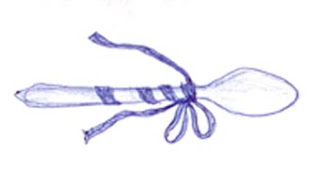
ink sketch: a small roast turkey, a larger apple, an even larger hourglass

April is national poetry month, isn't it? 

I'm not a poet-- not really. but sometimes my brain thinks very poetically.

I like to read poetry. 

even more I like to hear poetry read aloud. seeing it on a page isn't quite good enough usually.

this poem, "The Hill We Climb," from a whole fifteen months ago, is a good and grand tear-jerking hopeful poem to listen to. 

to read it silently-- well, it might still be good. or it might seem long and uneven, or as the post I linked to just there has it, too dense.

what are the best parts? it is hard to choose. and pasting them here won't do any justice to how they sound in Amanda Gorman's own voice.

listen and watch the whole thing first:

and now, here are the most moving sections for me-- these three from near the beginning, middle, and end:

We’ve learned that quiet isn’t always peace, and the norms and notions of what “just” is isn’t always justice.
And yet the dawn is ours before we knew it. Somehow we do it.
Somehow we weathered and witnessed a nation that isn’t broken, but simply unfinished.

and

So, while once we asked, how could we possibly prevail over catastrophe, now we assert, how could catastrophe possibly prevail over us? 

and the last few lines, singed with cliche just at the edges--

When day comes, we step out of the shade of flame and unafraid. The new dawn balloons as we free it.
For there is always light, if only we’re brave enough to see it.
If only we’re brave enough to be it.

maybe I ought to go looking for more of Ms. Gorman's poetry.


for the record, I've been reading various other non-poetry lately, including:

The Echo Wife, by Sarah Gailey  (not the winner of this year's Tournament of Books)

Poet Warrior, by Joy Harjo (recommended via yoga church friends)

Trigger Warning, short stories by Neil Gaiman

The Marvelous Clouds, by John Durham Peters

and 

A Primer for Forgetting, by Lewis Hyde (the same one who wrote Common as Air, which I managed to cite in my dissertation) 


here's to springtime and reading and being barefoot as much as possible. 

Friday, December 10

almost winter break

blue ballpoint sketch of two jingle-bells tied with a bow

the stars in the winter seem brighter, or shinier, or at least more, possibly because there is more night for them to shine in.

yesterday, it rained and rained and rained all afternoon and evening. it began around noon as the barest mist of precipitation in the grey, chill air. at some point while I was teaching my last three technical writing classes of the semester, it intensified until all the sidewalks were slicked and slippery. 

today was the first fully cold-cold day of the season. 

a dusting of snow on top of Granite Mountain made it look a little like a delightfully craggy, if lopsided, bundt cake. 

(did you know that "bundt" is technically a trademarked brand name? I was somewhat astonished to learn this when I doublechecked my spelling just now. I guess it's like kleenex and google and velcro and all the other trademarks that have crept into the zone of regular old vocabulary for what was once the latest amazing innovation but is now just everyday stuff. the company still enforces its trademark over Bundt cake pans-- but you can call the cake itself a bundt cake without issue. thank goodness.) 

way up to the north, the mountains around Flagstaff have much more than a dusting of snow-- they look like they've been repainted altogether in a major revision to the horizon. the distant trio of sharp peaks seem to be layered with at least seven perfectly fine, perfectly white veils of silk. 

when will it snow here in the valley? my guess is not until next month. but it's hard to say. the nights are officially freezing. the skies have been grey all week. the chill wind and the bright sun are battling over the temperature of the air.

now that classes are over, we'll see if I can sleep in past the late sunrises and hibernate a bit more, as nature's signals have been directing us all to do for at least a month. 

what else? my other winter break plans include... 

- visiting my family and homeland to the north
- getting a neat haircut, and maybe some highlights or color or something to go with it
- reading at least ten books for fun
- watching all the longest versions of all the Lord of the Rings films
- baking several pies + some other sort of holiday sweets for the neighbors 

I did want to join a Christmas choir this month, but I'm still a bit too worried about a certain viral pandemic situation. and singing in a facemask doesn't seem like it would be feasible or effective. hopefully next year...?

in less fun (but still pretty fun) arenas, I also have research to work on (more podcast transcript tracking, among other things) and LibriVox projects to edit and finish (just 4 more sections of this to get done). and that is plenty. in fact, I should take some of my expectations about all that down a few notches. two pies will probably be plenty. 

we'll see how industrious I actually want to be during the nineteen or so days of de facto freedom I have before spring semester drags me back to the office. if I can plan all my Business Communication syllabi next week, I won't have to think about that at all until probably... January 10 or so. 

{ these two images are very old scans of very old Christmas card sketches }

Monday, September 28

minds bodies words and shared responsibilities

this draft has been waiting some time for this day. I'd been thinking for a while to rework it into a post, but something always got in the way of my actually doing it. and then when I realized there was a date on the thing-- today's date-- I put it off yet again just so I could ultimately post it on its anniversary. 

this end-of-September Monday marks five years since I wrote the following five paragraphs for Dr. Thomas Rickert's posthumanism class. it is in a genre of grad school essay called the "paper day paper." (if you're curious for more examples, it just so happens that fellow Purdue student Ryan has impressively assembled all of his paper day papers here. not all of mine would be so easily digitized, though I have repurposed snippets from them before, but maybe it would be cool to follow Ryan's example someday eventually.)

-

Mind and Body are Just Words
28 Sept. 2015

I stole the title there from a recent podcast episode of Krista Tippett’s On Being, where she interviews Dr. Ellen Langer. Dr. Langer’s experiments on wellbeing and mindfulness hinge around an idea that “mind and body are just words,” separation between them is artificial, and there is real power in our expectations and perspectives. I am skeptical about the word just. It carries such belittling dismissiveness. Yes, mind and body are words, but words and meanings surely play into Dr. Langer’s whole point that perceptions can make a physiological difference. We can’t ignore words in all that. As Francesca Ferrando puts it, “futures do not appear out of nowhere: they are based on the presents, the pasts, and the ways they are being envisioned” (1). How we talk about things is part of how things thing for us, after all. How we talk about the future will be part of how the future futures.

One thoughtful listener’s reflection on the podcast’s webpage, from a semi-anonymous Sarah, adds, “Our whole body thinks, it's not a function confined to (that admittedly amazing organ) the brain; and the body, with it's [sic] internal and external senses, is dependant [sic] on it's [sic] environment as part of that thinking process.” Perhaps Sarah has been reading Andy Clark. He and this Sarah person at least seem to share some enthusiasm for the possibilities of describing our selves as inseparably enmeshed with environments and tools. Clark writes, beautifully, that “Minds like ours emerge from this colorful flux as surprisingly seamless wholes: adaptively potent mashups extruded from a dizzying motley of heterogeneous elements and processes” (219). Without all that mess, minds like ours (…if we can call them ours…) may not be possible. But for all we owe to the motley universe, Clark does allow us to own our minds and our agency. He describes these “surprisingly plastic minds” as belonging to “profoundly embodied agents: agents whose boundaries and components are forever negotiable and for whom body, sensing, thinking, and reasoning are all woven flexibly and repeatedly from the accommodating weave of situated, intentional action” (43). According to this model we are individuals, yet also systems and parts-of-systems, with flexible boundaries and all kinds of negotiable bits and pieces.

I wonder who/what has the upper hand in these negotiations. Where exactly does agency live in these woven, mashedup contraptions? Anywhere? I imagine it must be distributed, shared among world and self and materials, just as enmeshed as anything else. And if so, the question of control and responsibility—of agency—begins to feel worryingly and impossibly mystifying. This On Being episode that I have stuck in my head suggests, in its earnest, pop-sciencey way, that if one can just change one’s attitude, one can change one’s whole life (for the better, presumably). What power. What responsibility. Several comments in response to this theme argue with great concern about the ethics of asking, say, a lower-class/minority laborer to adjust their attitudes to their work, as if that should be empowering and liberating enough for any profoundly embodied agent. Is it really? Could it ever be?

Along these lines, Katherine Hayles points out early on in How We Became Posthuman the need to consider “how certain characteristics associated with the liberal subject, especially agency and choice, can be articulated within a posthuman context” (5). It doesn’t seem very easy. She later returns to the concern of subjectivity, recognizing that “As the liberal humanist subject is dismantled, many parties are contesting to determine what will count as (post)human in its wake. For most of the researchers discussed in this chapter [Narratives of Artificial Life, ch 9], becoming a posthuman means much more than having prosthetic devices grafted onto one’s body. It means envisioning humans as information-processing machines” (246). And this, of course, is only one sense of human-ness. We can—and at times already do—conceptualize ourselves as information. Hayles quotes William Gibson on the posthuman body as “data made flesh” (5). But might we reverse this? Will distinctions between information and identity blur as much as those between mind and body and world are blurring? Activist and tech designer Aral Balkan would argue and has argued in numerous talks that they have. In a manifesto-esque blogpost called “Indie Data,” (and elsewhere) Balkan writes about the tools and information and processes that are our digital selves—informational yous and mes—digital selves caught up in a market where human rights don’t necessarily apply, where corporations ask us to trade all our digital fingerprints for free access to technology. Balkan begs his audience to pay attention to the ways we participate in that conversion of self into data, and he hopes “to create, support, and popularise products that empower you to own your digital self; your data, tools, and derived intelligence.” Such ownership is not given. It too must be negotiated. Clamored for and defended and somehow brought into sustainable possibility.

Our texts so far in this class have been prodding us to draw fewer dividing lines and to start recognizing the ways in which every thing is part of a lot of other things. Whether it’s Heidegger’s Being and presencing, or Hayle’s enacted/embodied/empatterned systems and information-processings, or Clark’s EXTENDED models of mind, all these words urge more careful thinking, more open awareness, more inclusive considerations of a good future for humans and non-humans and everywhere they overlap. I’m not sure exactly how much control we have over using our present presencing to carve out space or language where the future will best future for the most people, places, and things, but I hope we have a little bit. Whether we do or don’t, we should keep talking about it and writing about it with words that are just words and words that are more than just words. Whether we do or don’t, we should try not to mess it up, if we can.

Scholarly References
Clark, Supersizing the Brain: Embodiment, Action, and Cognitive Extension
Ferrando, "Is the post-human a post-woman?"
Hayles, How we Became Posthuman: Virtual Bodies in Cybernetics, Literature, and Informatics


Postscript:
I have a new academic idol of sorts. Patricia Roberts-Miller blogs about key principles of argument and rhetoric and how those intersect with politics and demagoguery and it's all gloriously insightful stuff. I might blog more about her work later on, someday